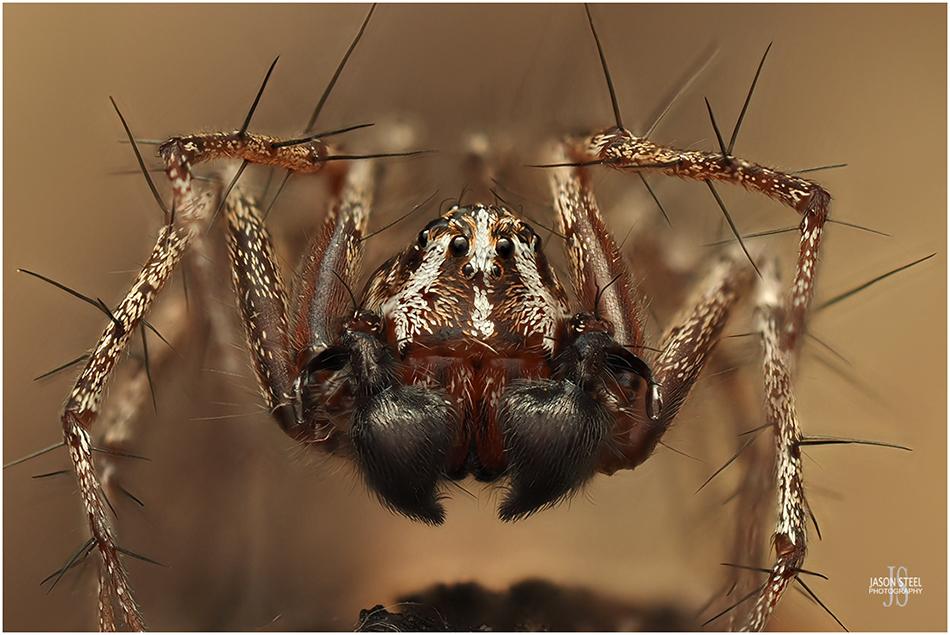
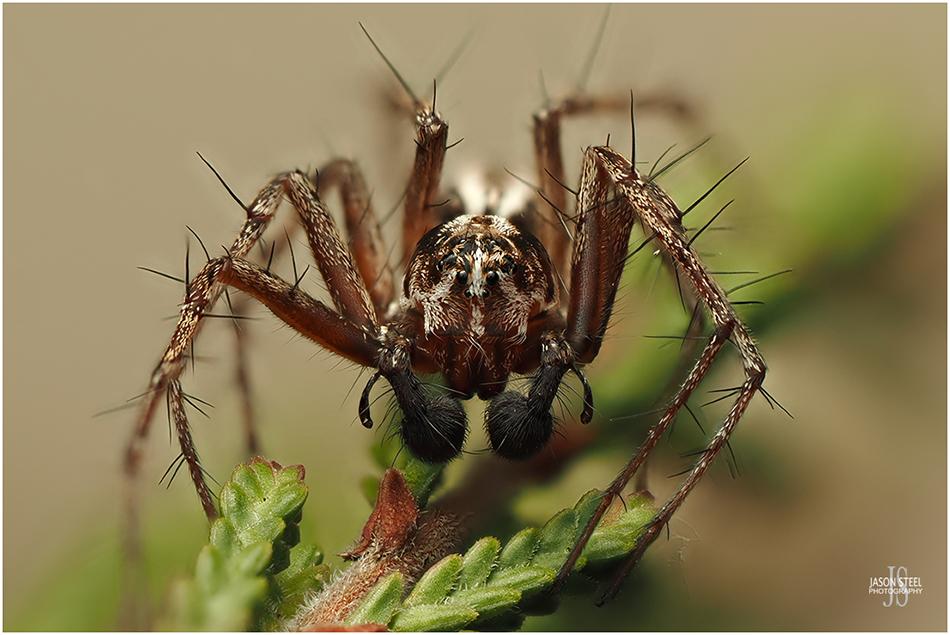
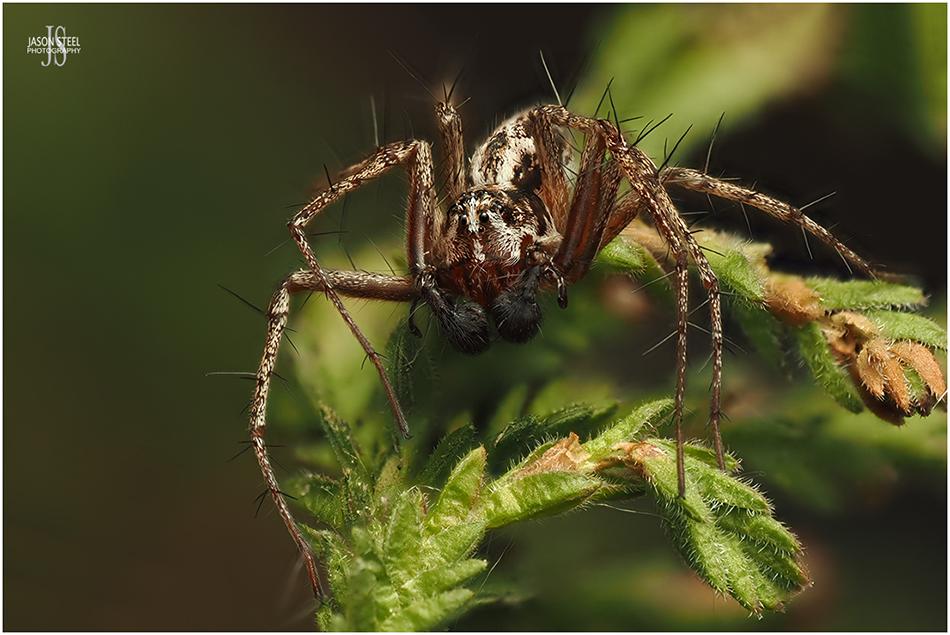
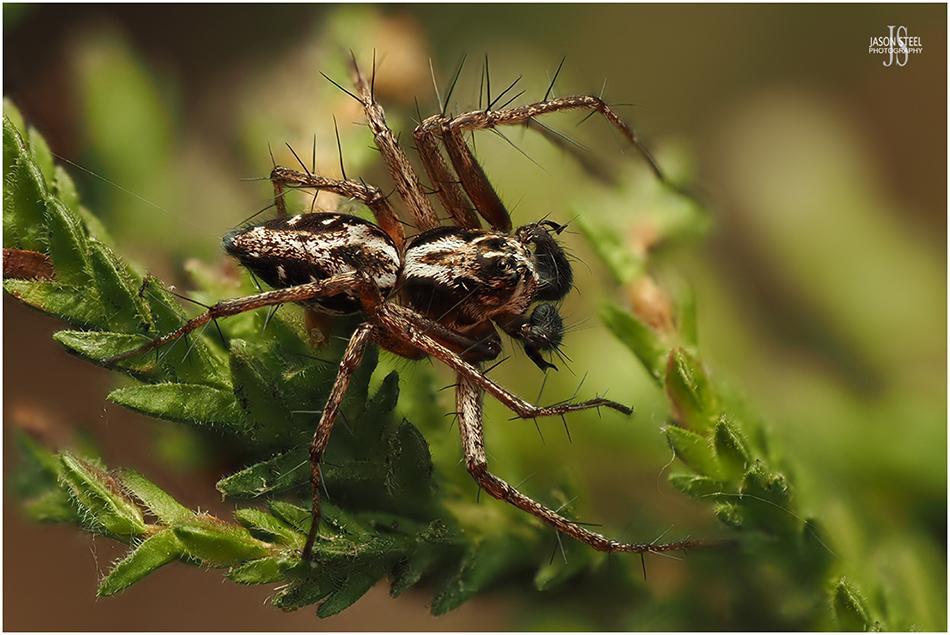
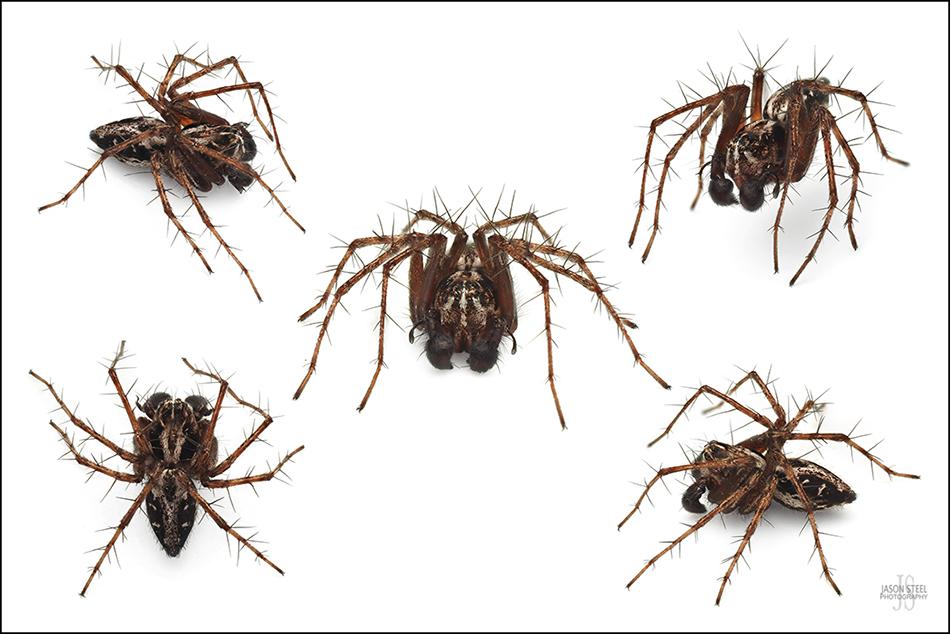
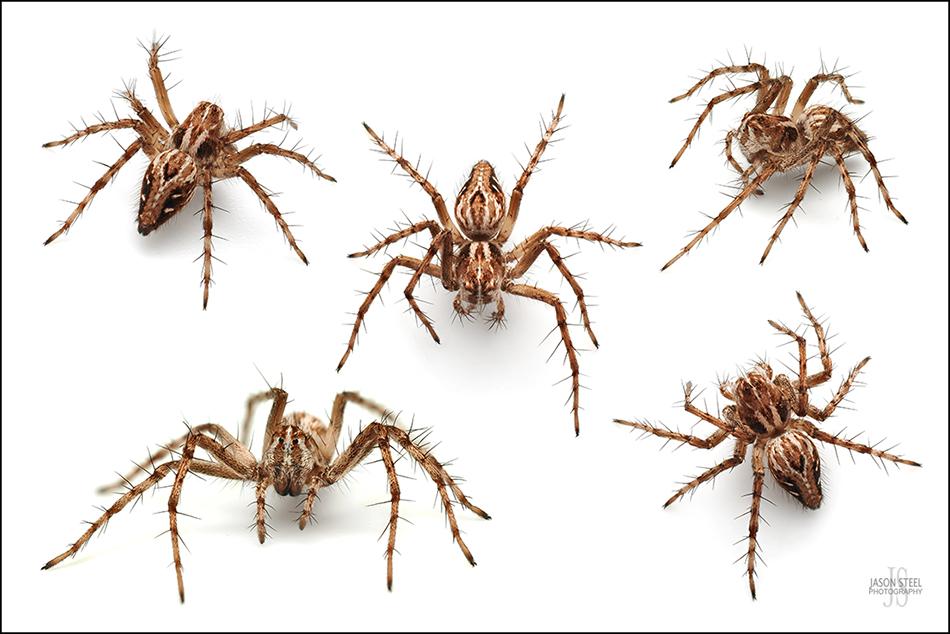
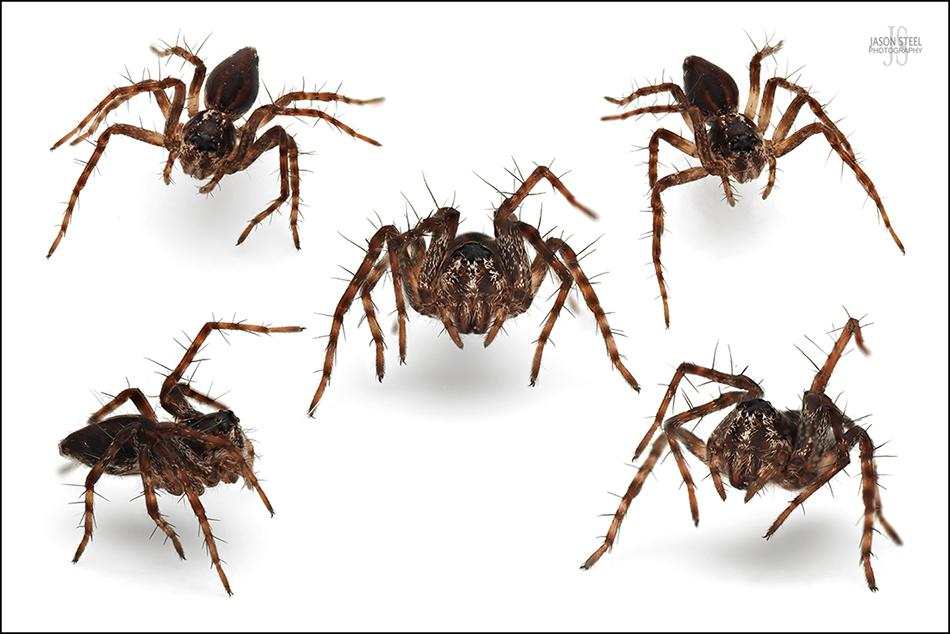
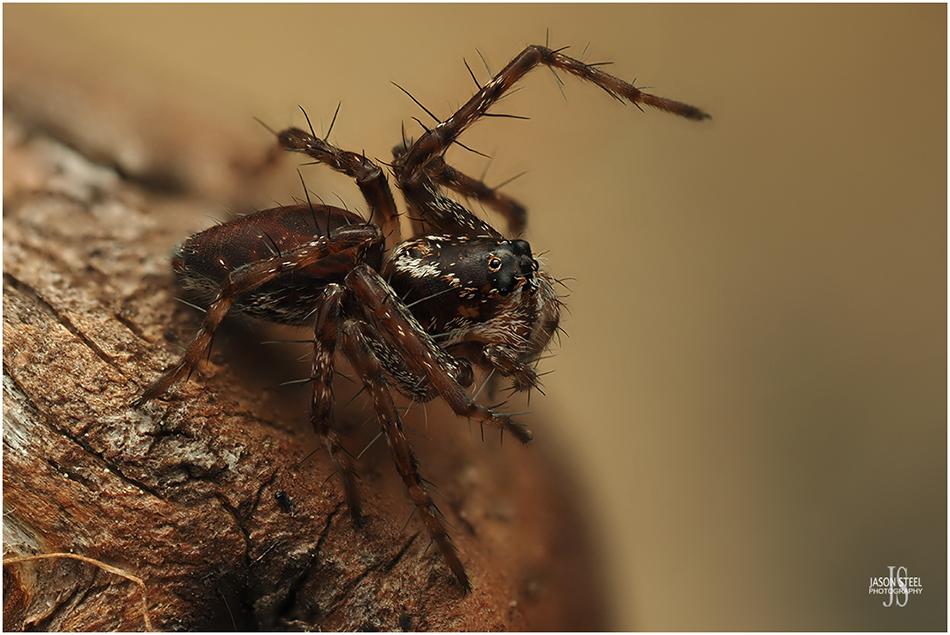
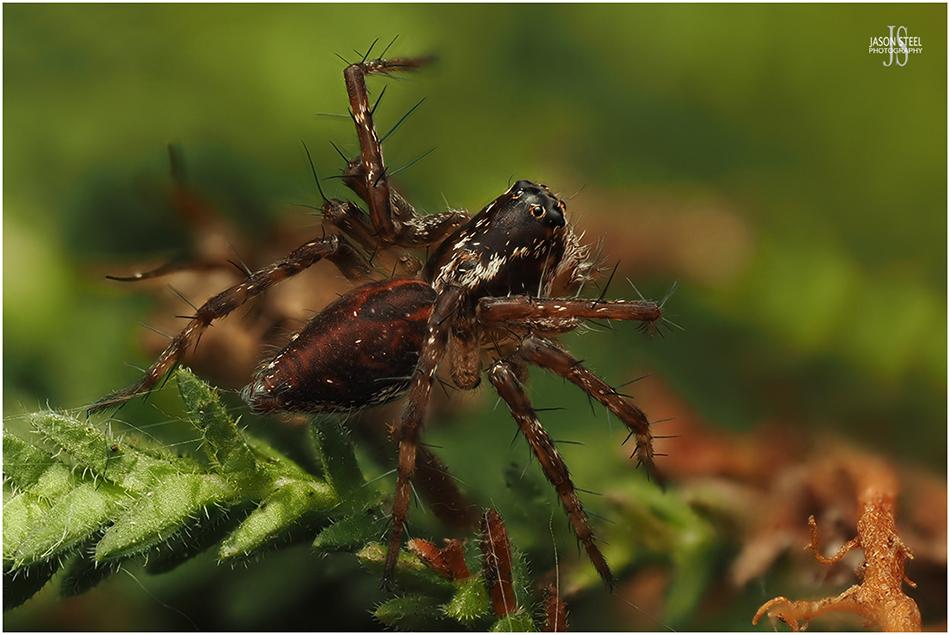
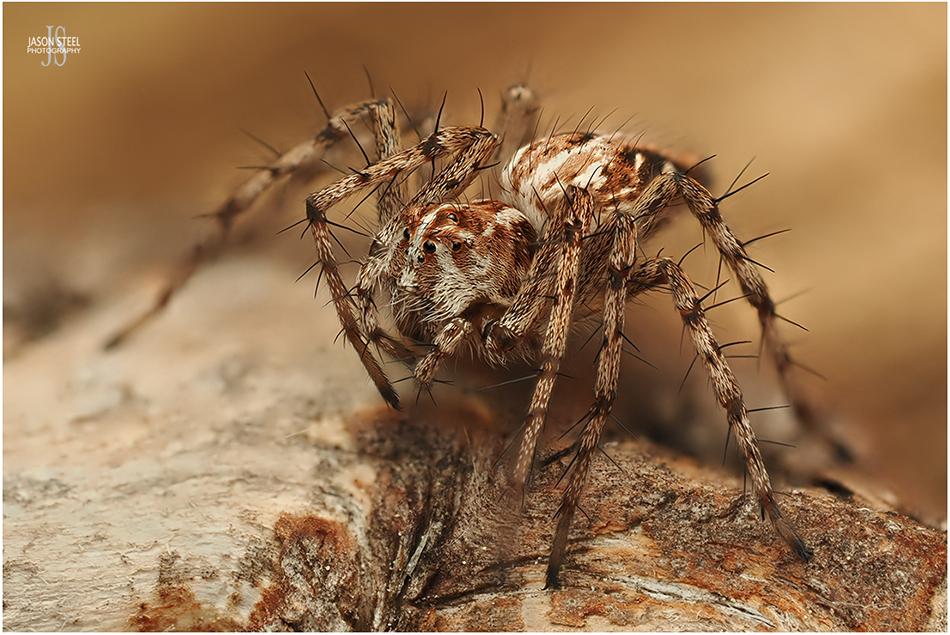
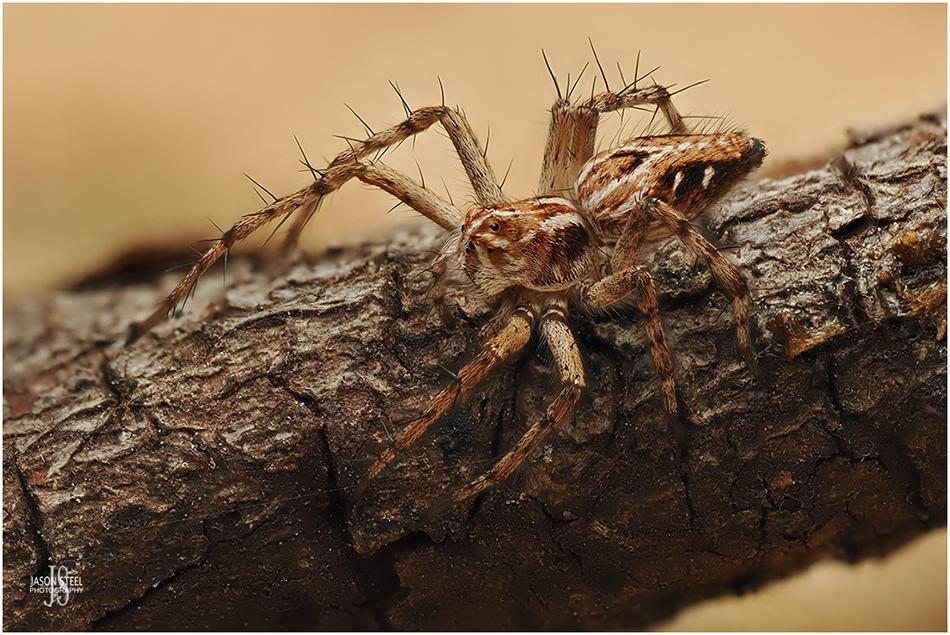
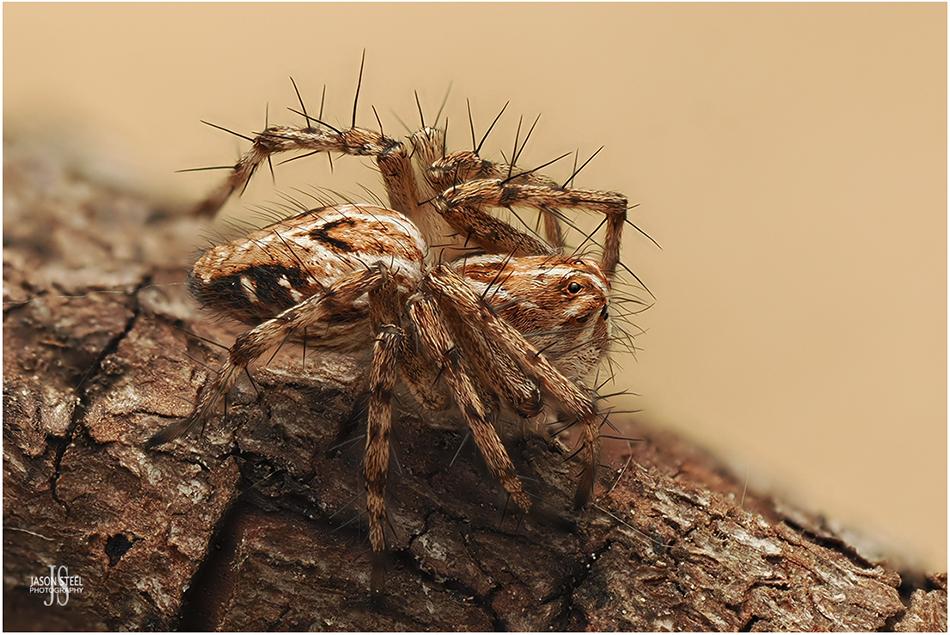
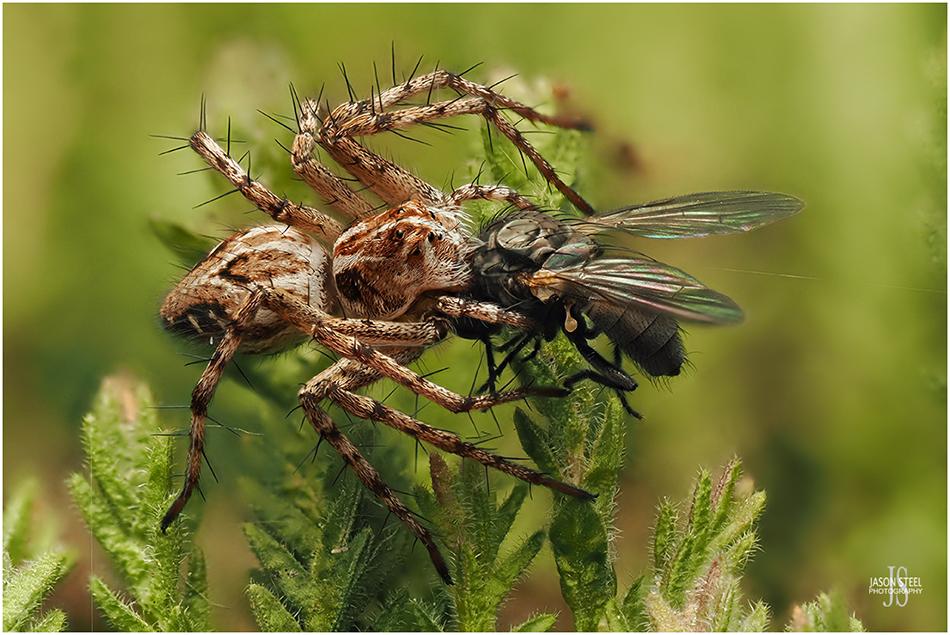
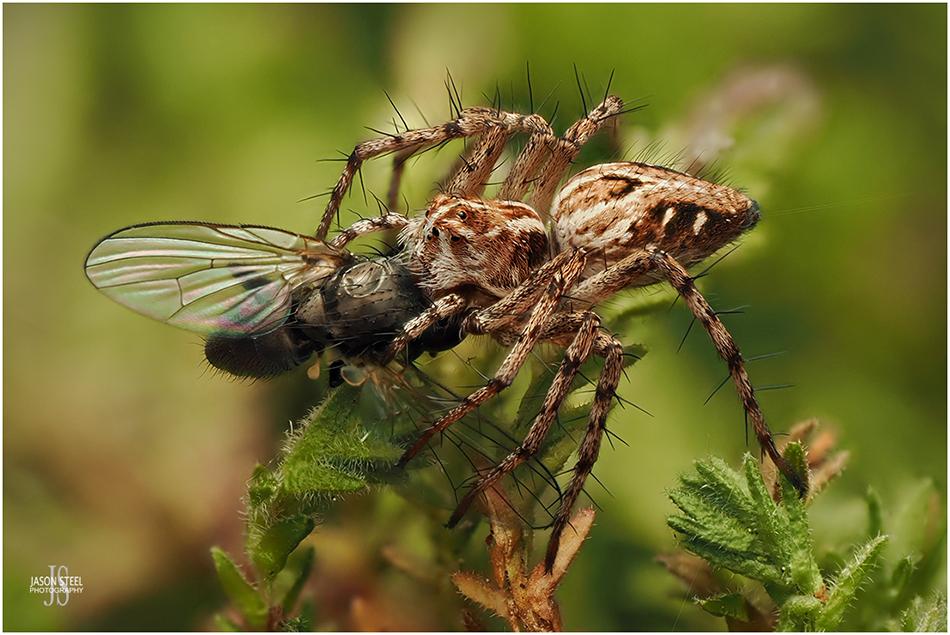
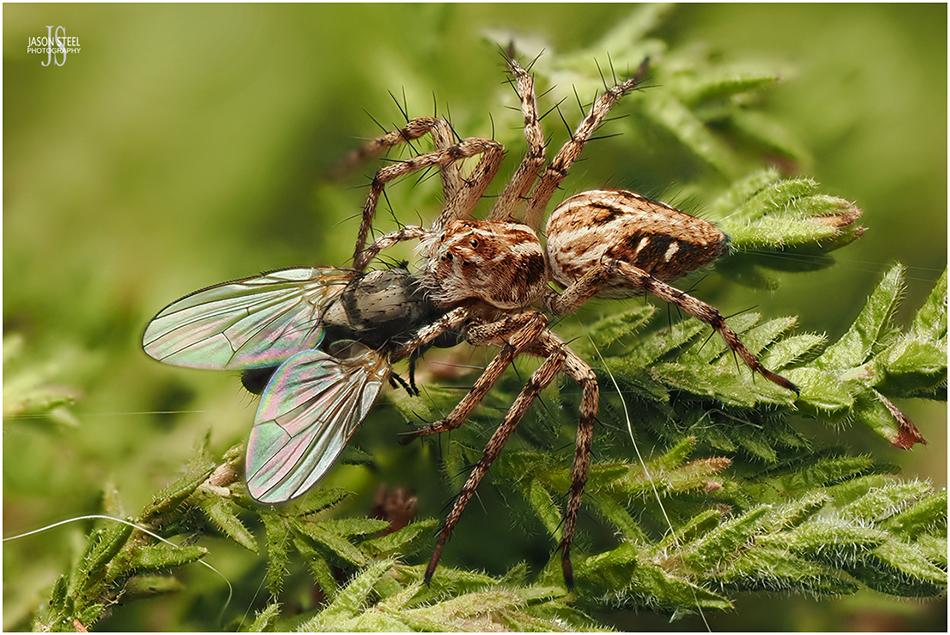
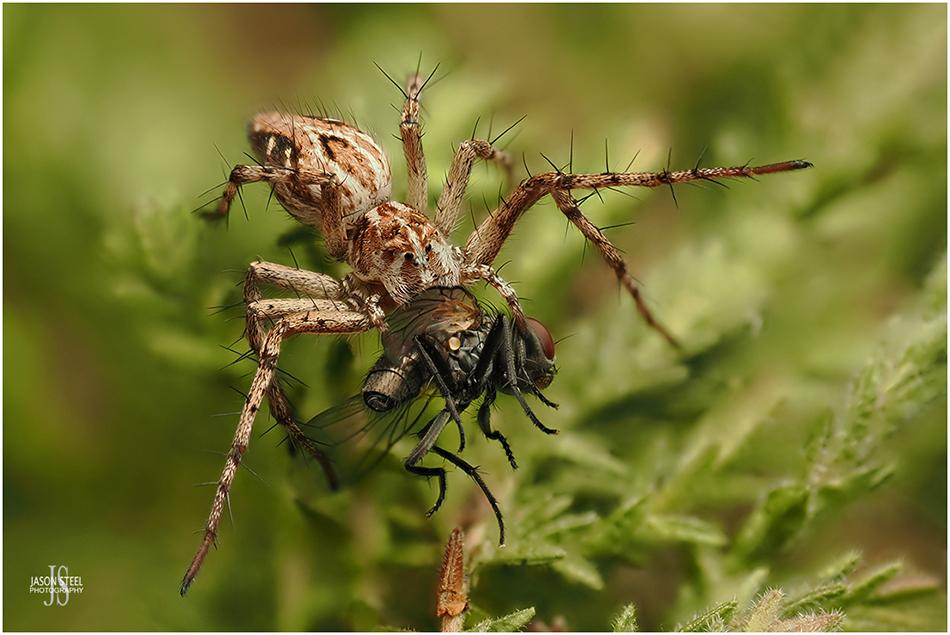
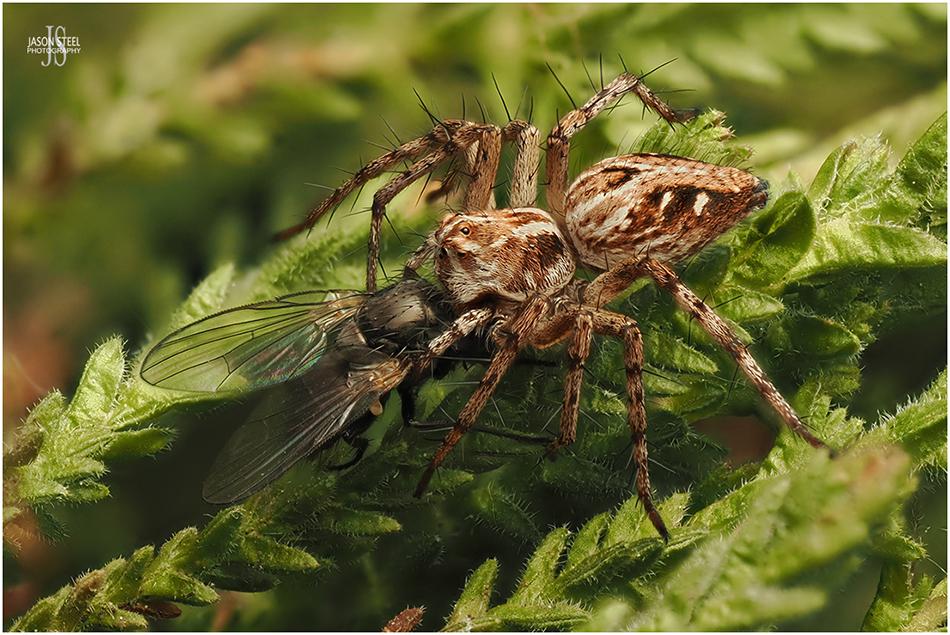
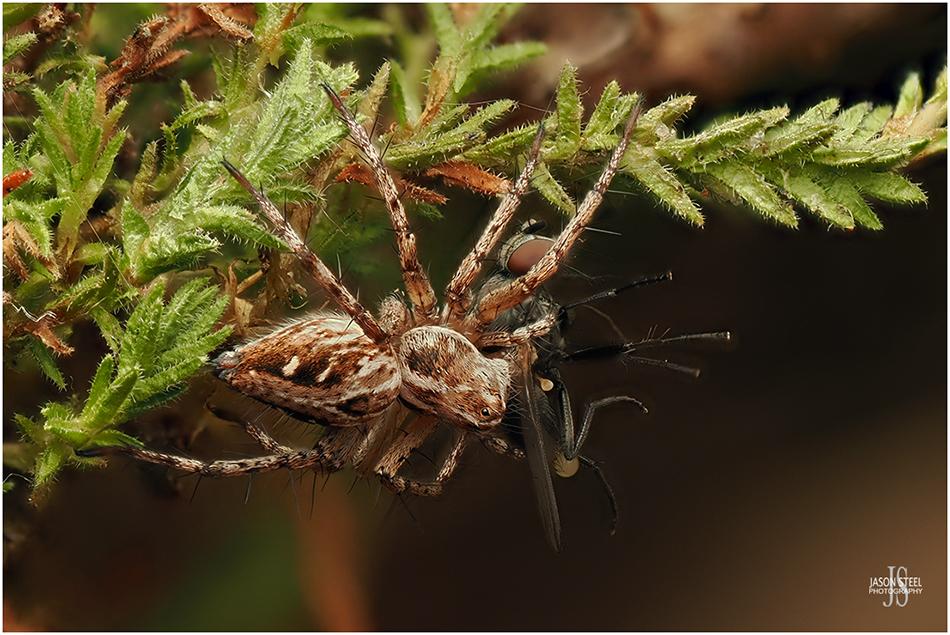
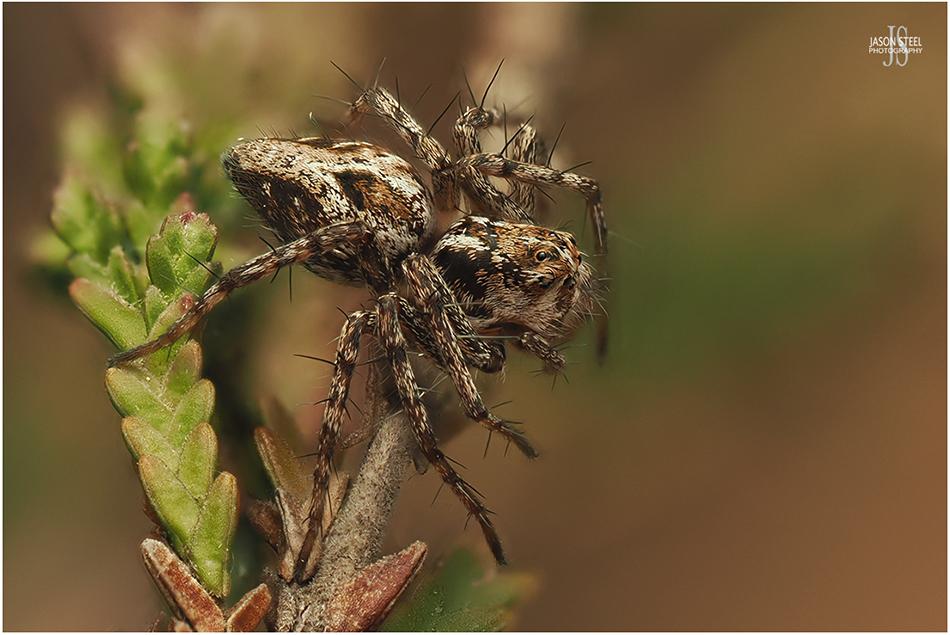
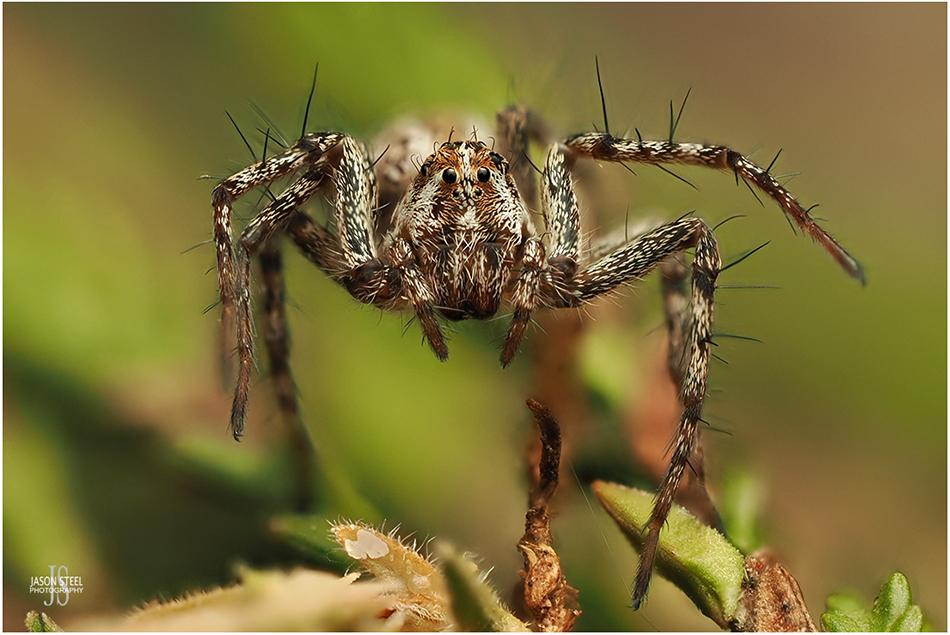
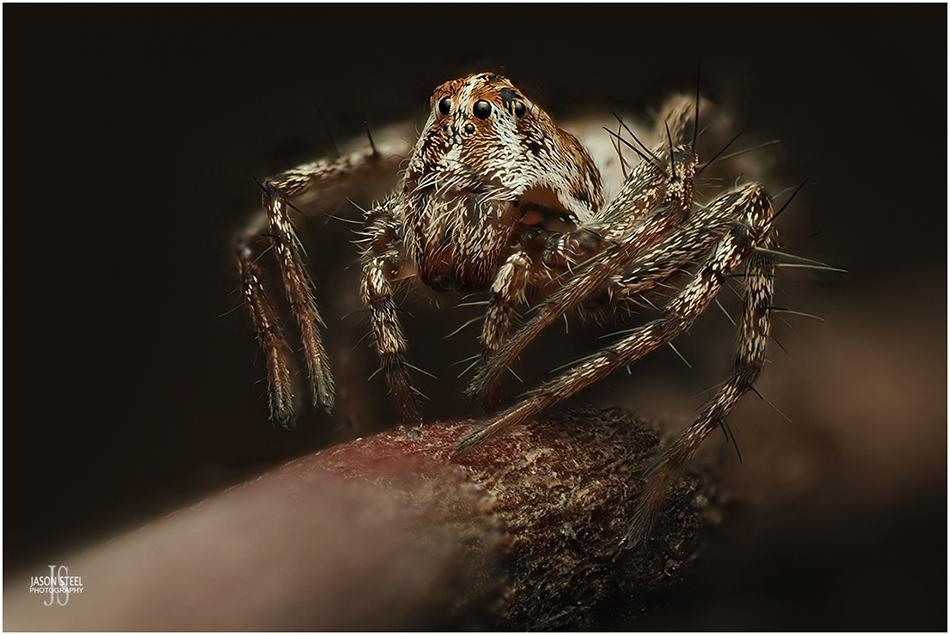
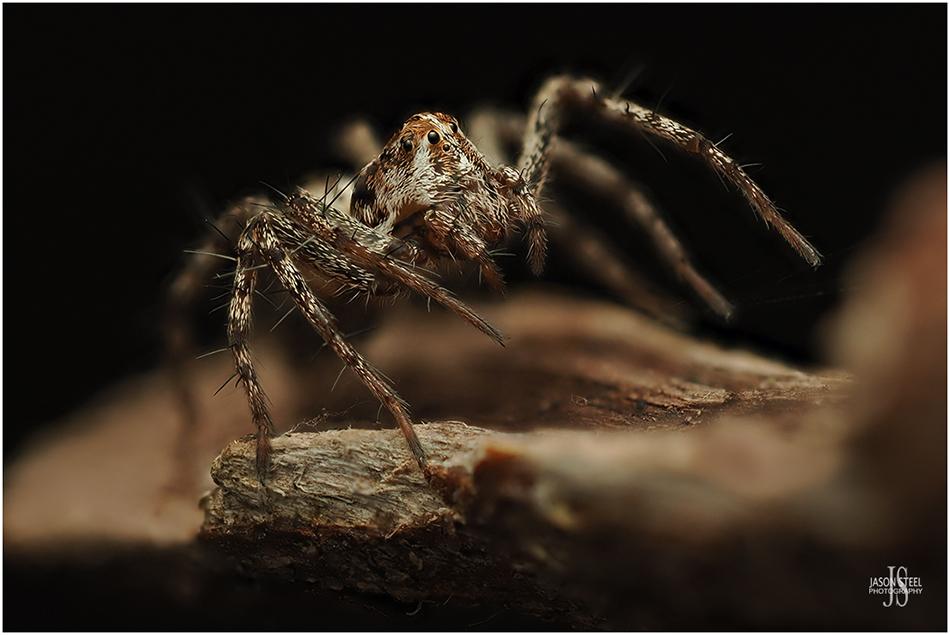
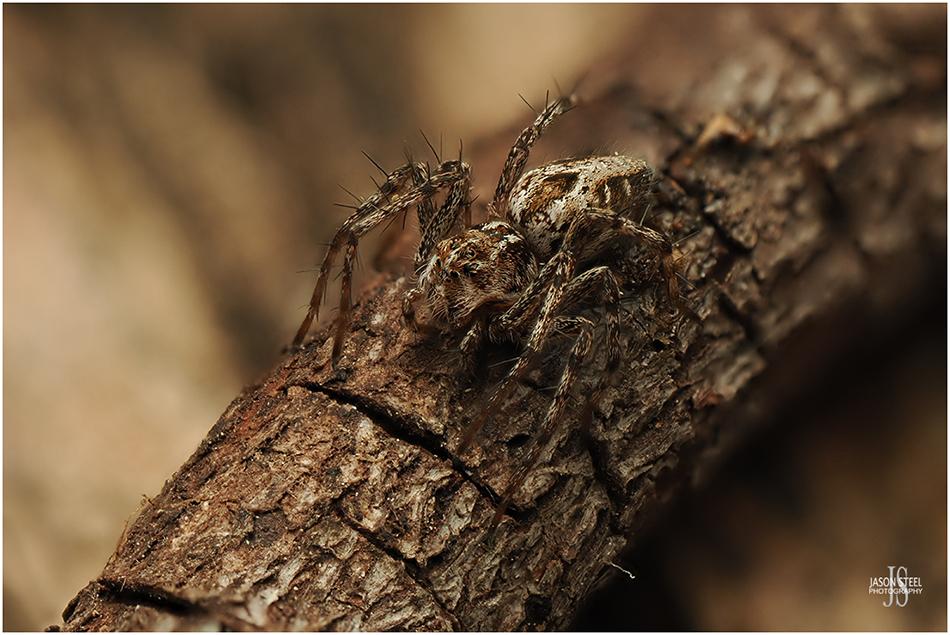
6mm adult male Lynx Spider, found on heather at a Surrey heathland site, 4th May 2026.
Lynx Spider / Variegated Lynx Spider - (Oxyopes heterophthalmus)
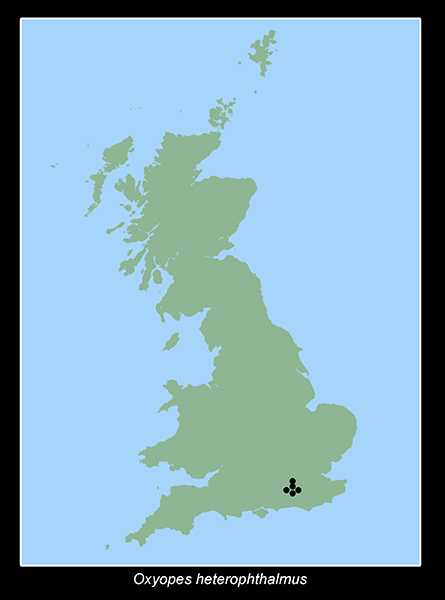
Lynx Spiders belong to the family Oxyopidae. As of 2026 there are 448 accepted species of Lynx Spider, within 10 different genus, found throughout the world. 11 of these species are found in Europe. Oxyopes heterophthalmus, sometimes known as the Variegated Lynx Spider, is Britain's only native species of Lynx Spider. Variegated means having streaks, patches, or marks of different colours, and refers to the markings found on the face, body and legs of this spider. Oxyopes heterophthalmus was first recorded in Britain back in 1855. This is a nationally rare species in Britain, which for the last 100 years has been confined to just a handful of heathland sites in Surrey. On the sites where it is present it can be quite numerous though. There are some old records, from 1858 to 1910, of Lynx Spiders being found at the New Forest, near Lyndhurst and Brockenhurst, in South Hampshire, but this species hasn't been seen in the New Forest for over 100 years now. Elsewhere Oxyopes heterophthalmus has a Palearctic distribution and is widespread in central and southern Europe. In Britain Oxyopes heterophthalmus is quite vulnerable to the risk of extinction. Being restricted to just a handful of heathland sites, in Surrey, good habitat management of these sites is hugely important for the long-term survival of this species. Over-grazing of the land, or wildfires, could easily wipe out a colony at any one of the special sites where they are found.
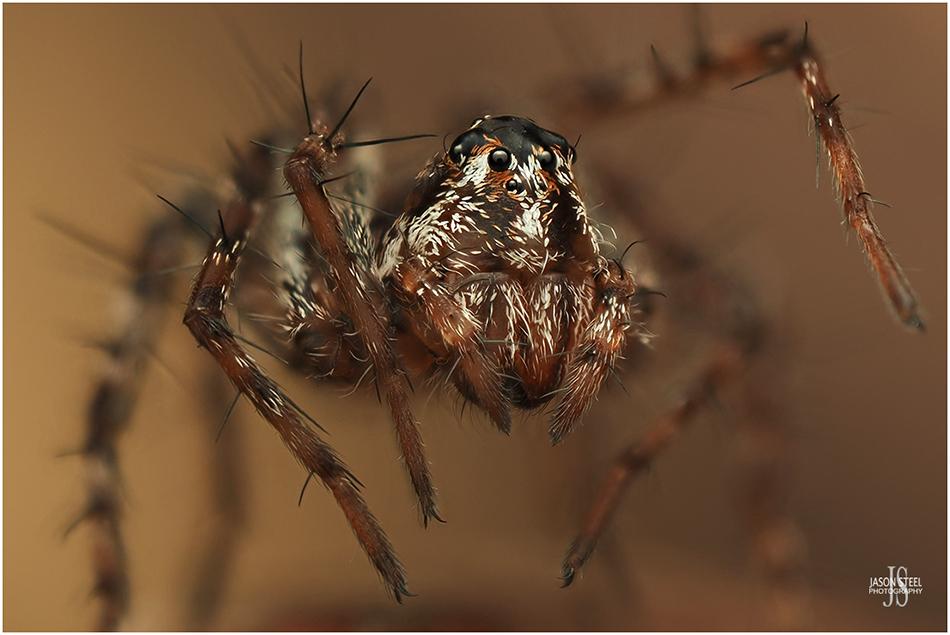
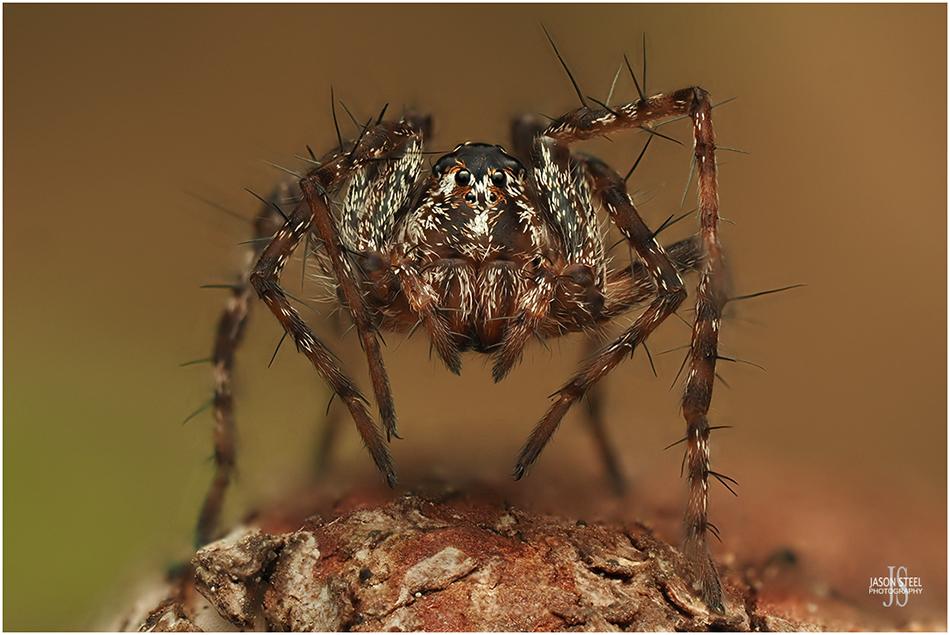
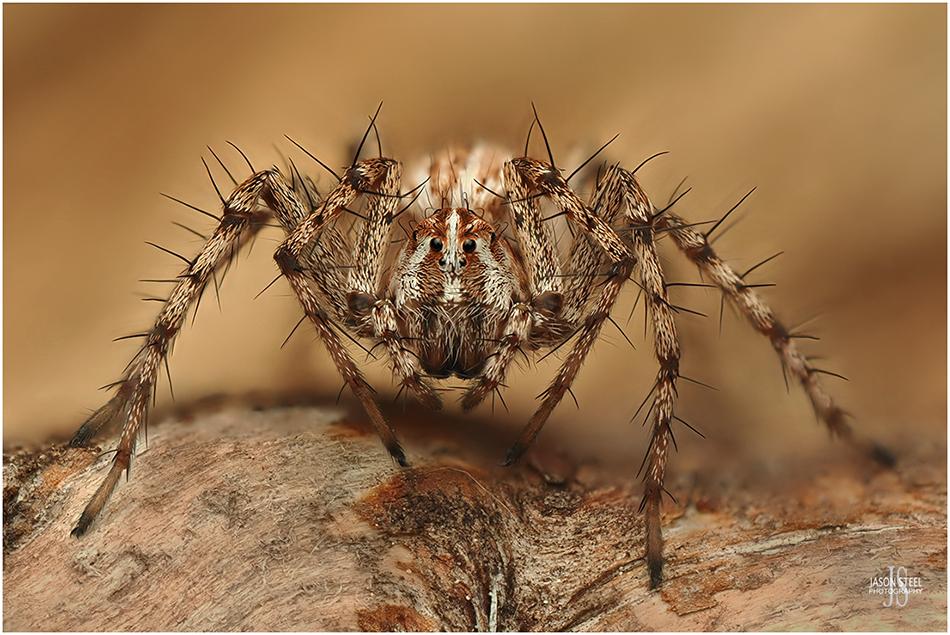
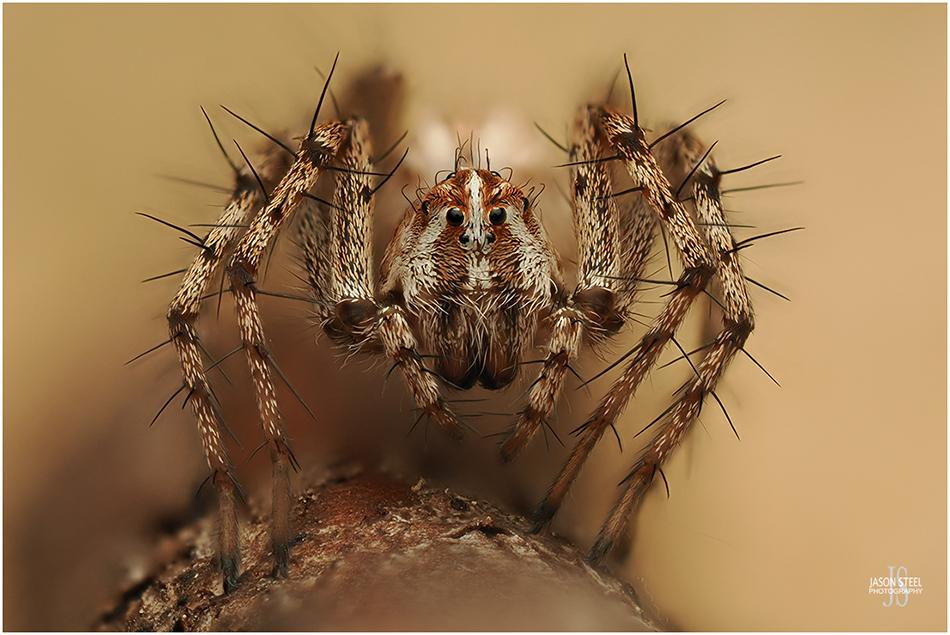
Lynx Spiders are cursorial hunters, meaning they don't build webs to catch their prey and rely on ambush tactics or chasing down their prey. They earn their common name from their agile hunting of other invertebrates, as they stealthily prowl through heather, and other low vegetation, in a manor akin to the Lynx cat. The long, graceful, slender legs afford these spiders great speed and dexterity, which they use to full advantage when chasing down and jumping on their prey. Although they are competent hunters Lynx Spiders are primarily ambush predators, and most of their time is spent waiting motionlessly for an unsuspecting victim to land, or wander too close to them, before they pounce upon it. Although Lynx Spiders don't make a web to hunt their prey they may suspend themselves on vegetation by a few silken threads. Despite the small size of their eyes Lynx Spiders, still have pretty good eyesight for a spider, although not as good as either Salticidae or Lycosidae, both of which have considerably larger primary eyes than Oxyopidae. In fact their binominal name "Oxyopes", is believed to have derived from the Greek words “oxy”, meaning sharp, and “ops”, which refers to eyes. The later part of their name "heterophthalmus" also derives from the Greek language and means "different eyed". This refers to the variation in the size of each of the four pairs eyes on this species, which like other Lynx Siders, have the six larger eyes arranged in a hexagonal pattern. Some sources believe that "Oxyopes" actually means “quick footed”, and is derived from the Greek words "oxys", meaning quick, and "pezos", meaning on foot. Both origins would make sense as Oxyopes species are both sharp-eyed and quick-footed.
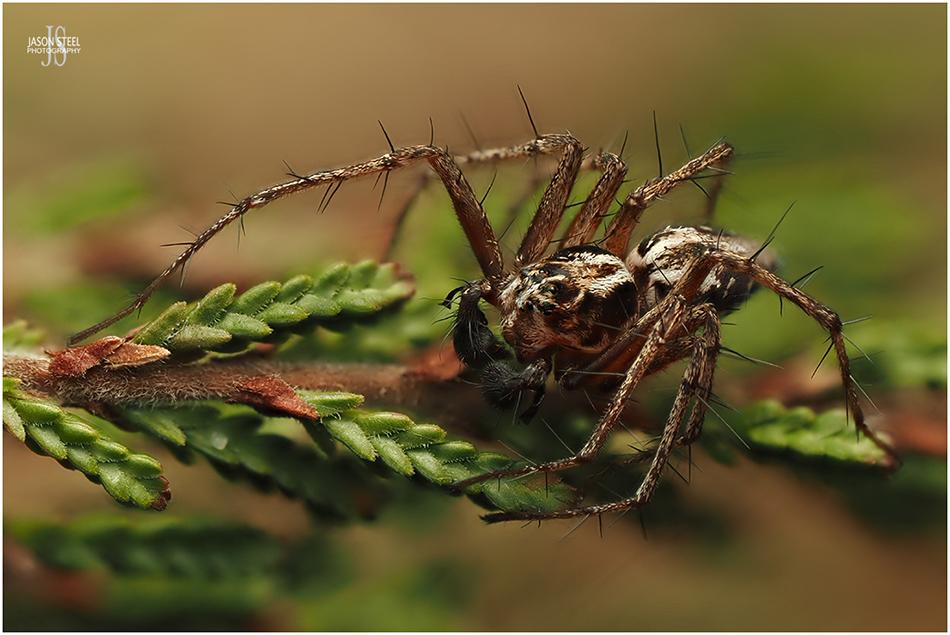
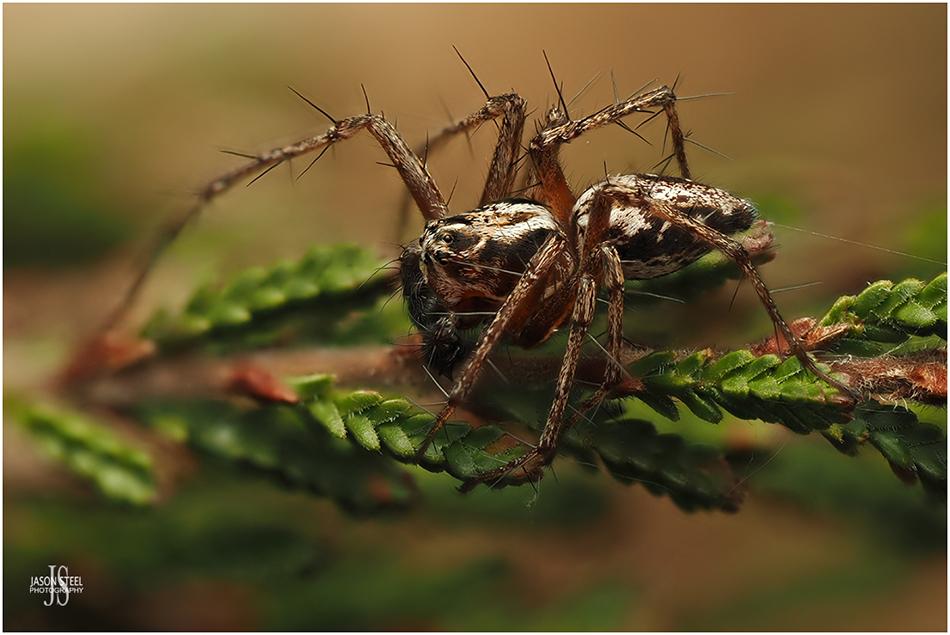
All Lynx Spiders have a somewhat prickly appearance, as their legs are covered in long, dark spine-like bristles, which are actually sensory-hairs, known as setae. Setae pick up tiny vibrations, and variations in the movement of air, and help the spiders to detect both prey and potential predators. These leg-spines also help with the capture and securing of prey, as well as helping the spiders to navigate through vegetation at speed.
One feature that's not found on all Lynx Spiders, but is present on Lynx Spiders within the Oxyopes genus, is the presence of small scales on the face area, abdomen, and the legs of the Oxyopes species of Lynx Spiders. These scales are actually specialised, flattened setae. The scale-shaped setae are usually white, silver, golden yellow or grey, and often have a metallic, iridescent sheen. They serve to break up the shape of the spider and give it a cryptic appearance, which may afford them some degree of camouflage and protection from predators. It's possible that these scales may also reflect UV light, which could aid the spider's well-developed eye-sight as a diurnal hunter.
Oxyopes heterophthalmus is a fairly distinctive spider in the UK and shouldn't be confused with other species. Possible exceptions could include the Running Crab Spider, Rhysodromus histrio, and the Nursery-web Spider, Pisaura mirabilis, which are also both cursorial hunters that can also sometimes also be found on heather. - LINK
LINK 1 LINK 2 LINK 3 LINK 4 LINK 5
* I would like to give huge thanks to Ben Dale for his help finding this species on Surrey heathland. *
© All Photographs and text on this page are copyright protected and are the intellectual property of Jason Steel.
Photographs were taken using: OM System OM-1 mkii camera, OM System M.Zuiko Digital ED 90mm F/3.5 Macro IS PRO Lens, Godox V860iii flash & AK OM-90 Pro diffuser.