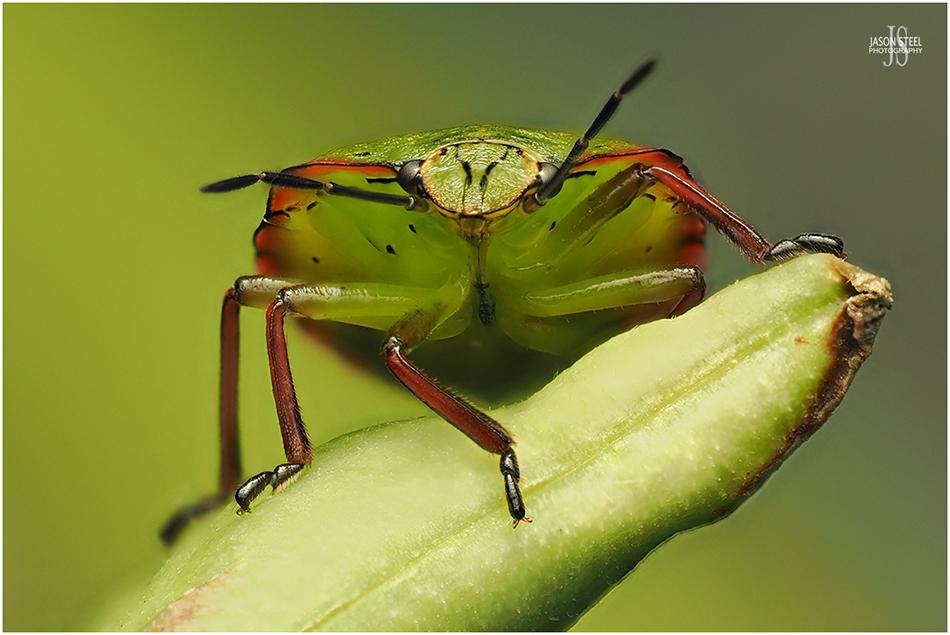
Colourful 10mm final instar of the Southern Green Shieldbug, found in Camden, NW London, 28th September 2026.
True Bugs - Hemiptera
Hemiptera is an order of insects, often referred to as True Bugs. Within the Hemiptera order are several groups of insects, including Shieldbugs, Mirid Bugs, Planthoppers, Leafhoppers, Assassin Bugs, Bed Bugs and Aphids. All species within all of these groups share a common arrangement of piercing-sucking mouthparts. Some use these mouthparts to feed on plant sap whilst others use them to pierce and suck on the liquified internals of creatures. The name "True Bugs" is sometimes limited to the suborder Heteroptera. The sub-order Heteroptera are also sometimes referred to as Typical Bugs.
Shield Bugs / Stink Bugs - Pentatomidae, Acanthosomatidae, Scutelleridae, and Cydnidae
Order - Hemiptera - Bugs
Sub-Order - Heteroptera
Superfamily - Pentatomoidea
Families - Pentatomidae, Acanthosomatidae, Scutelleridae, and Cydnidae (Shield Bugs)
The term Shield Bug can be used to refer to species within any of the four families listed above. In the USA Shieldbugs are generally referred to as Stink Bugs, as many species have the ability to release a pungent, foul-smelling secretion when handled or threatened, from glands by their hind legs. Species within these families often have the shape of a heraldic shield when viewed from above.
One family of True Bugs is Pentatomidae, and these are commonly known as Shield Bugs. The name "Pentatomidae" comes from two Greek words, "pente" which means "five", and "tomos" which means sections. The name refers to the five separate segments of the antennae on all Shield Bugs within the Pentatomidae family. The family Acanthosomatidae are mostly herbivores that feed on trees and shrubs. The family Scutelleridae are commonly known as Jewel Bugs, or Metallic Shield Bugs, as many of them have bright metallic colouration. The family Cydnidae Cydnidae are known as Burrowing Bugs, or Burrower Bugs, as many members of the group live a subterranean lifestyle beneath the soil.
There are around 46 species of Shieldbug recorded in the UK. Adult Shieldbugs are characterised by their flat, shield-shaped bodies.These bugs start their life as nymphs that can resemble small Ladybirds in size and shape. Many Shieldbugs feed on plant-sap, but some species are also partly or fully carnivorous, and may feed on garden pests. Shieldbugs generally go through five stages of development as they mature, with each stage of juvenile and sub-adult being referred to as an "instar".

Mating Common Green Shieldbugs. Found in a grass meadow in Bexley, SE London, 16th April 2017.
Common Green Shieldbug (Palomena prasina)
A common and widespread species found in various habitats, often on deciduous trees and shrubs from April to November. This is a fairly large Shieldbug and adults grow to around 12-13.5mm. Adults can be identified by the punctuated wing-cases, visible dark membrane on their wings, and reddish antennae. Newly emerged adults may not yet have this dark membrane which can lead to confusion with the Southern Green Shieldbug (Nezara viridula), which has been found in the UK since 2003. Adults of the Southern Green Shieldbug are best distinguished by the 3-5 white spots across the back of their shoulders. The Common Green Shieldbug often turns dark green, or even brown, prior to overwintering. The Common Green Shieldbug feeds on the sap from within plants, typically apples, pears and hazelnuts. They cause minimal damage to plants and would have to be present in very high numbers to be any kind of problem for gardeners. They provide a good source of food for birds.

5mm fourth instar of the Common Green Shieldbug, and 3mm third instar, found at Camden, NW London. 6th July 2025.

5mm Common Green Shieldbug, fourth instar, found at Blakeney, north Norfolk coast. 30th June 2025.
This is the fourth instar of the Common Green Shieldbug. It has a notably more rounded rear end than that of the final instar. It was found on the "flea darts" of Wall Barley, Hordeum murinum, growing at the side of the road in north Norfolk.

5mm Common Green Shieldbug, fourth instar, found at Blakeney, north Norfolk coast. 30th June 2025.

Common Green Shieldbug, final instar, found on brambles and nettles in Lullingstone, Kent, 19th August 2021

Common Green Shieldbug, final instar, found on oak leaves in Lullingstone, Kent, 19th August 2021

An overwintered adult Common Green Shieldbug, photographed at Cliffe, Kent, 30th March 2024.

An overwintered adult Common Green Shieldbug, photographed at Cliffe, Kent, 30th March 2024.

An overwintered adult Common Green Shieldbug, photographed at Cliffe, Kent, 30th March 2024.

An overwintered adult Common Green Shieldbug, photographed at Cliffe, Kent, 30th March 2024.

An overwintered adult Common Green Shieldbug, photographed in Bexley, SE London. 2nd March 2025.
Although Common Green Shieldbugs are usually seen from April through until November adults do overwinter and may emerge to bask on mild, sunny winter days. These specimens are often brown rather than the typical green colouration. This brown specimen was one of two found at Hall Place gardens, in Bexley, SE London, on a bright, sunny day in early March. The temperature was 10 degrees and both specimens were basking in the late afternoon sun at 4pm, on a large bush.

An overwintered adult Common Green Shieldbug, photographed in Bexley, SE London. 2nd March 2025.

An overwintered adult Common Green Shieldbug, photographed in Bexley, SE London. 2nd March 2025.

An overwintered adult Common Green Shieldbug, photographed in Bexley, SE London. 2nd March 2025.

An overwintered adult Common Green Shieldbug, photographed in Bexley, SE London. 2nd March 2025.

An overwintered adult Common Green Shieldbug, photographed in Bexley, SE London. 2nd March 2025.

An overwintered adult Common Green Shieldbug, photographed in Bexley, SE London. 2nd March 2025.

An overwintered adult Common Green Shieldbug, photographed in Bexley, SE London. 2nd March 2025.

An overwintered adult Common Green Shieldbug, photographed in Bexley, SE London. 2nd March 2025.

An overwintered adult Common Green Shieldbug, photographed in Bexley, SE London. 2nd March 2025.

An overwintered adult Common Green Shieldbug, photographed at Ashdown Forest, East Sussex. 27th March 2025.
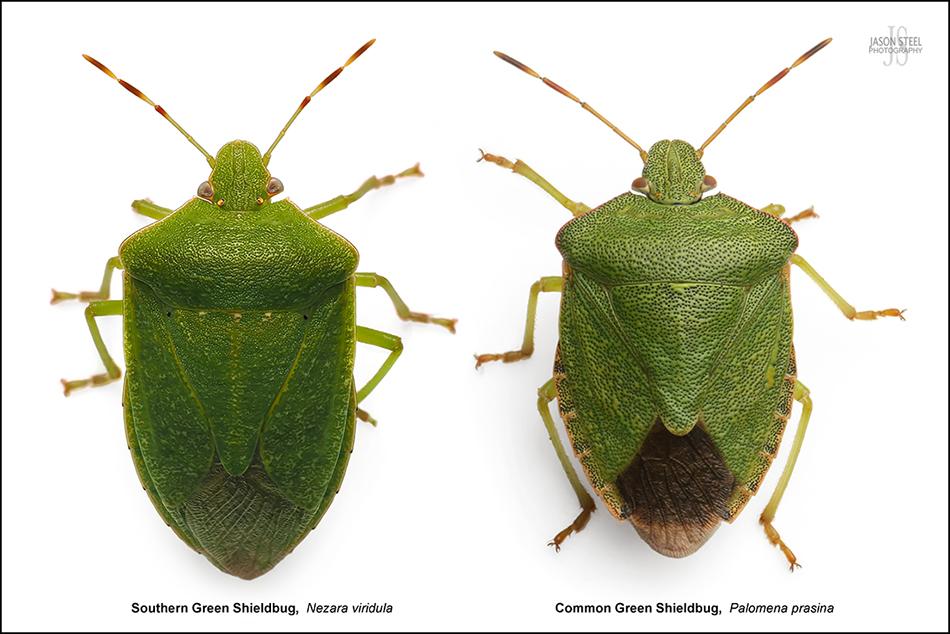
Southern Green Shieldbug, Nezara viridula & the Common Green Shieldbug, Palomena prasina.
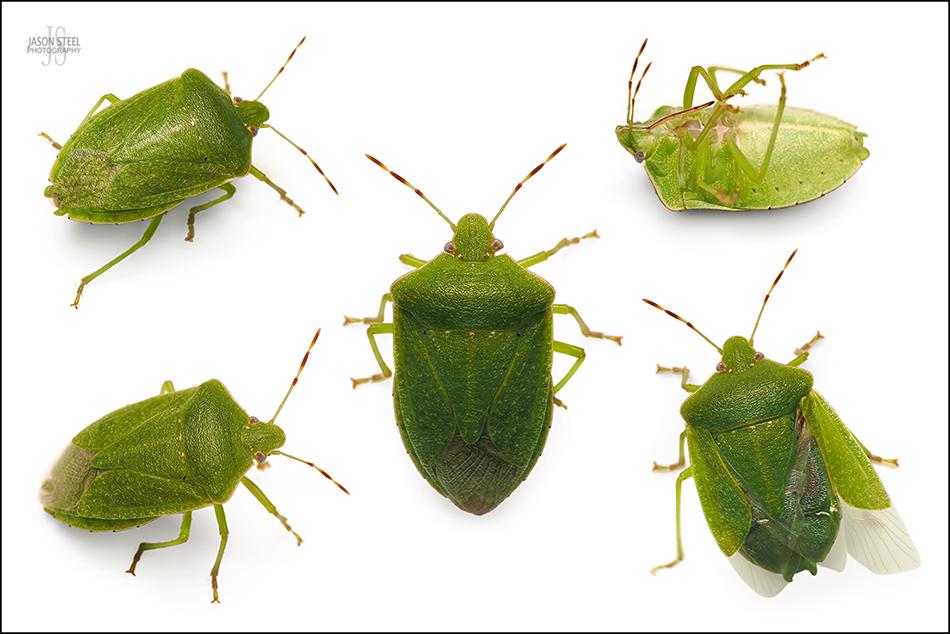
Southern Green Shieldbug. Found at Swanscombe Marshes, Kent. 10th September 2026.
Southern Green Shieldbug (Nezara viridula)
During their growth as juveniles Shieldbugs go through several stages of development, known as instars. This is the final instar of the Southern Green Shieldbug before it reaches maturity.
This non-native species is originally from Africa and has been breeding in the UK since 2003, where it was first recorded in London. Whilst easily recognisable as an immature specimen once mature the Southern Green Shieldbug is almost completely green in colour and at first glance identical to our native Common Green Shieldbug, Palomena prasina. The two species can be distinguished by a very feint row of 3 white spots across the top of the shoulders of the Southern Green Shieldbug, that are not present on the Common Green Shieldbug. Often there are three small white spots, accompanied by two small black dots, one at either end of the row of white spots. The Southern Green Shieldbug also slightly larger, and slightly more slender that our native Common Green Shieldbug, and as an adult grows to a length of around 11-15mm.
The Southern Green Shieldbug is most commonly recorded on allotment sites and gardens, where despite feeding on a variety of plants it seems to have a preference for runner beans, french beans, raspberries and tomatoes, where it causes distorted bean pods and damaged fruits. Damage is caused as the Shieldbug sucks the sap from fruit, seeds, leaves and stems of the host plants. Instars are black, green, or black & green but adults, as the name suggests, are completely green. Adult specimens can be found all year round but are most common from August - September. Although this species is considered as a pest in many other countries the impact it is having in the UK may be limited though as adult Southern Green Shieldbugs do not mature here until the end of the summer, when vegetable and fruit crops are usually at the end of their season.
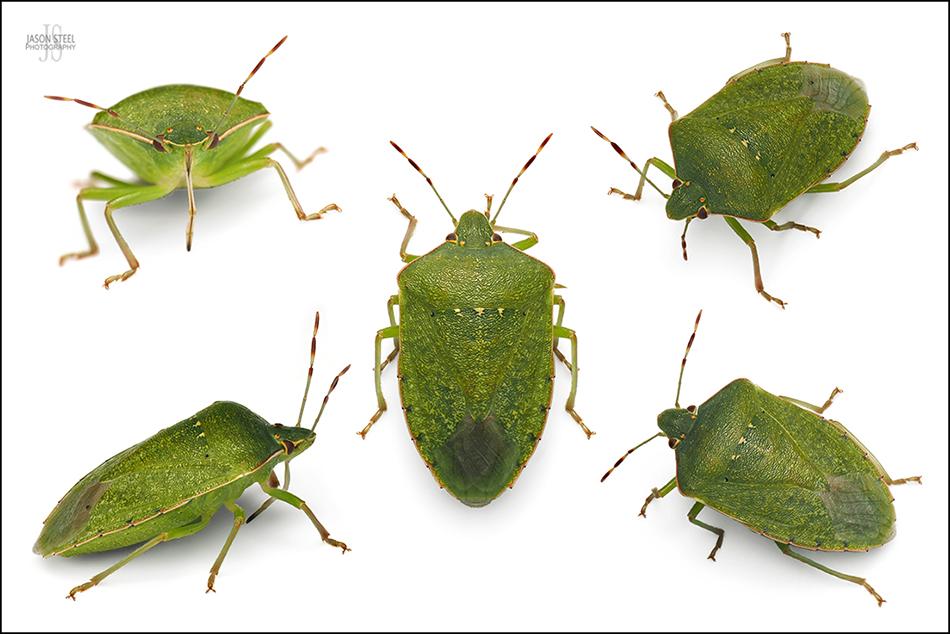
13mm adult Southern Green Shieldbug, found in SE London, 10th October 2026.
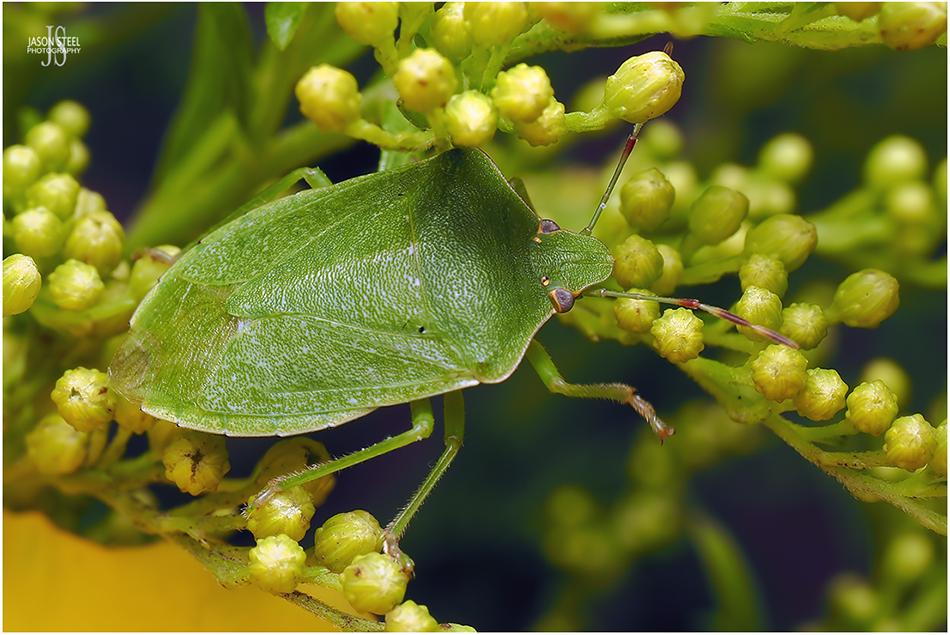
Southern Green Shieldbug. Found at Swanscombe Marshes, Kent. 10th September 2026.
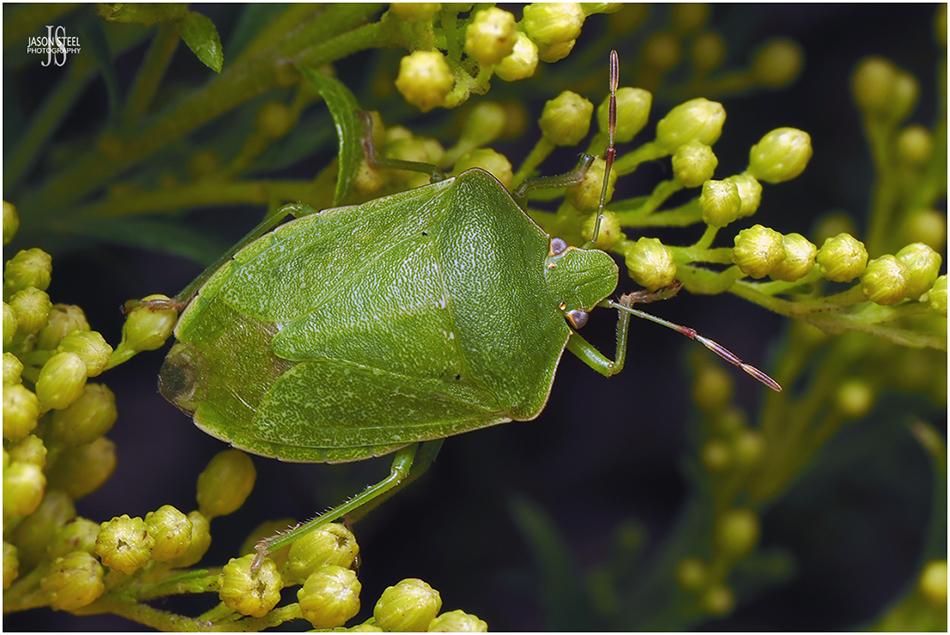
Southern Green Shieldbug. Found at Swanscombe Marshes, Kent. 10th September 2026.
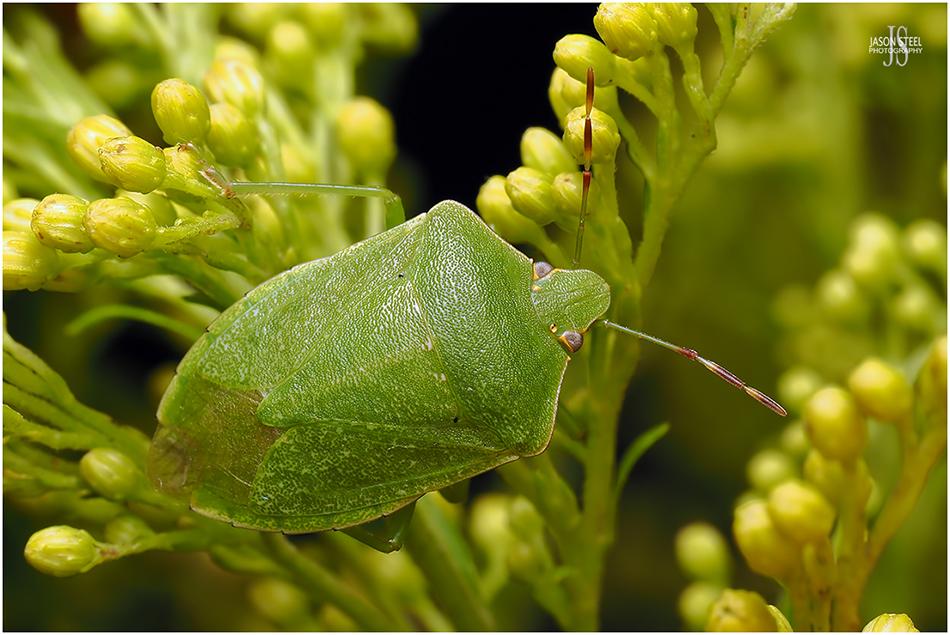
Southern Green Shieldbug. Found at Swanscombe Marshes, Kent. 10th September 2026.

Final instar of the Southern Green Shieldbug. One of several specimens found on bean plants in SE London in early September 2020

10mm final instar of the Southern Green Shieldbug in SE London, 23rd November 2022.

10mm final instar of the Southern Green Shieldbug in SE London, 23rd November 2022.

10mm final instar of the Southern Green Shieldbug in SE London, 23rd November 2022.

10mm final instar of the Southern Green Shieldbug in SE London, 23rd November 2022.
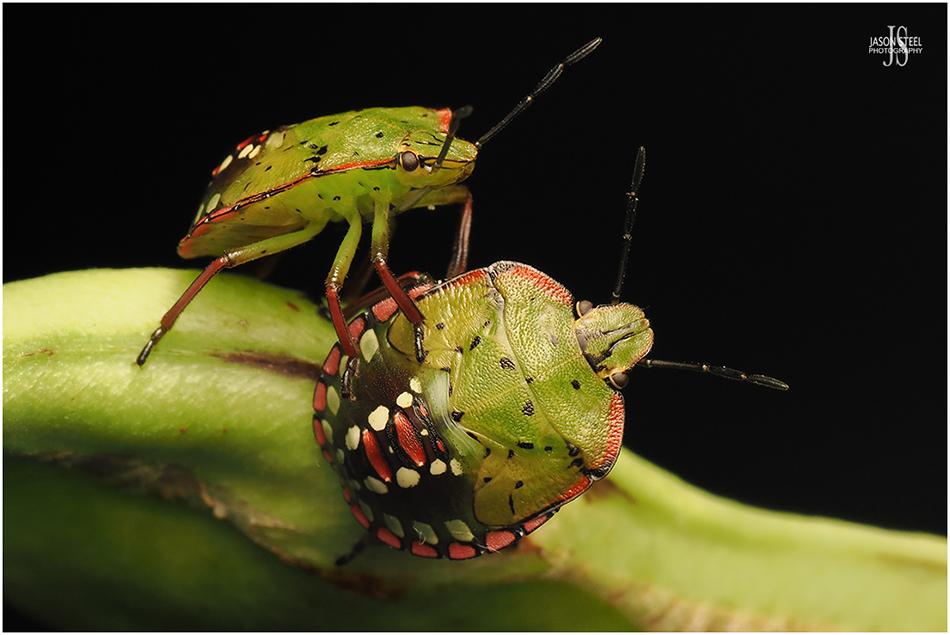
Colourful 10mm final instars of the Southern Green Shieldbug, found in NW London, 28th September 2026.
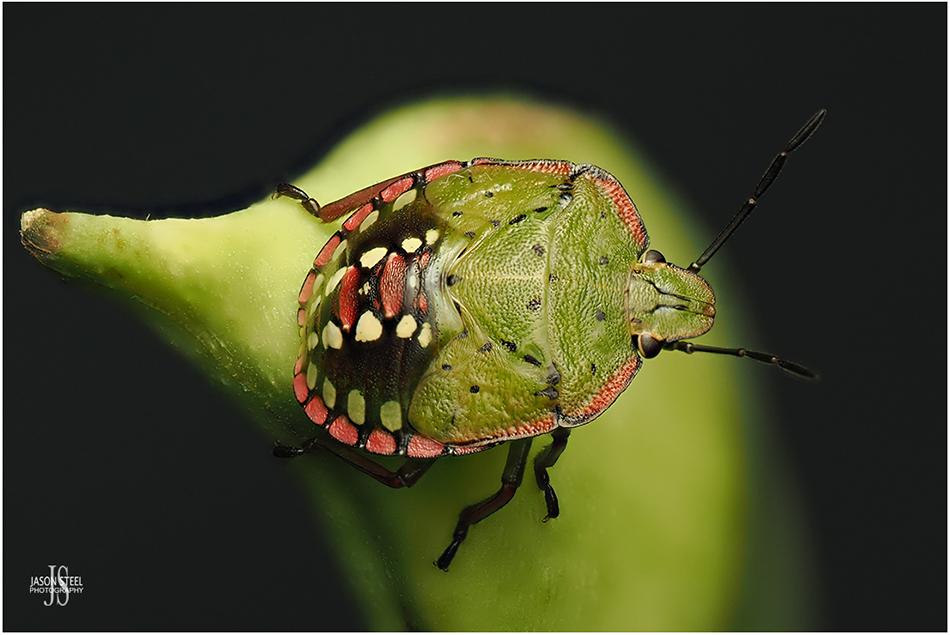
Colourful 10mm final instar of the Southern Green Shieldbug, found in NW London, 28th September 2026.
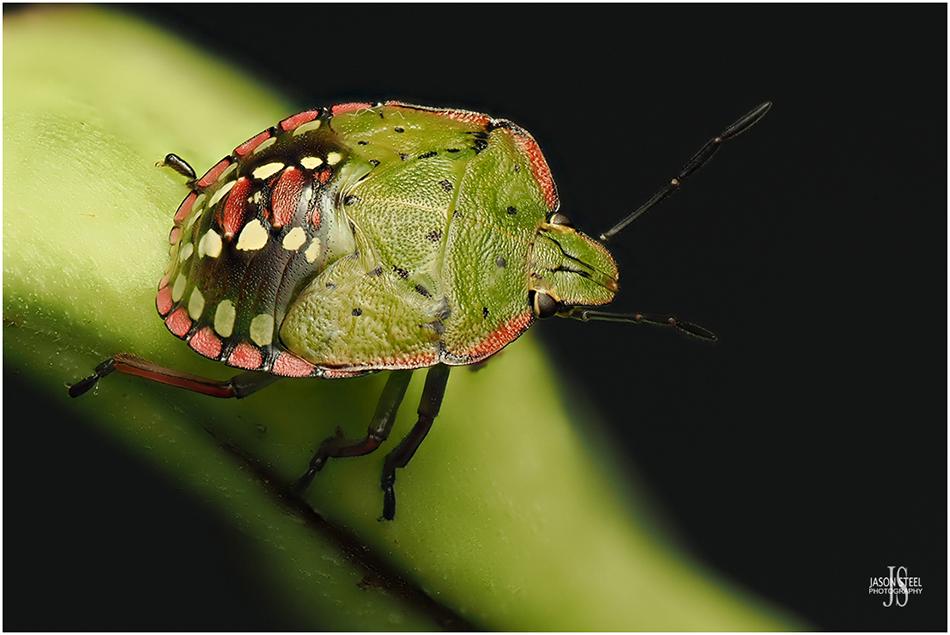
Colourful 10mm final instar of the Southern Green Shieldbug, found in NW London, 28th September 2026.
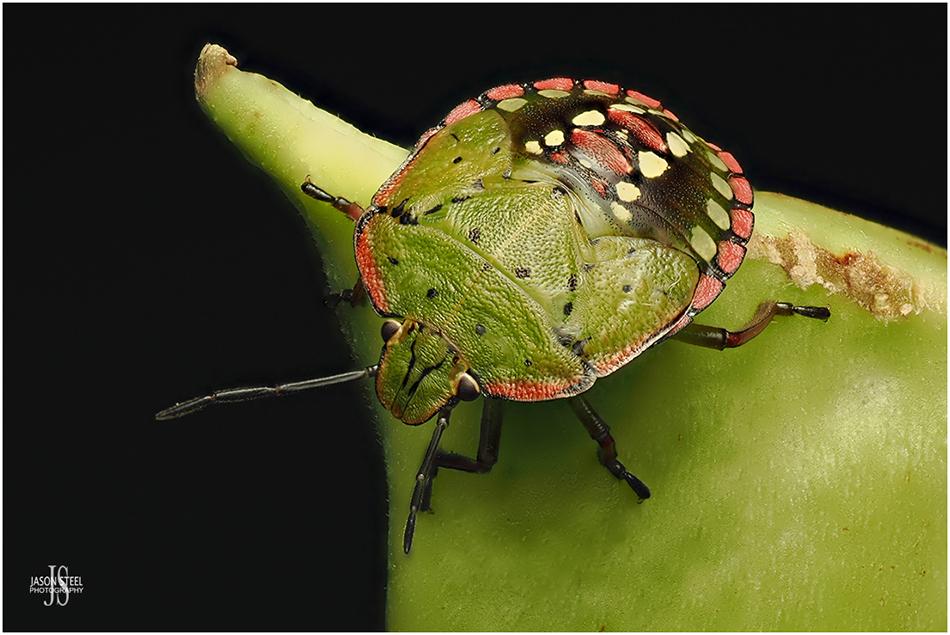
Colourful 10mm final instar of the Southern Green Shieldbug, found in NW London, 28th September 2026.
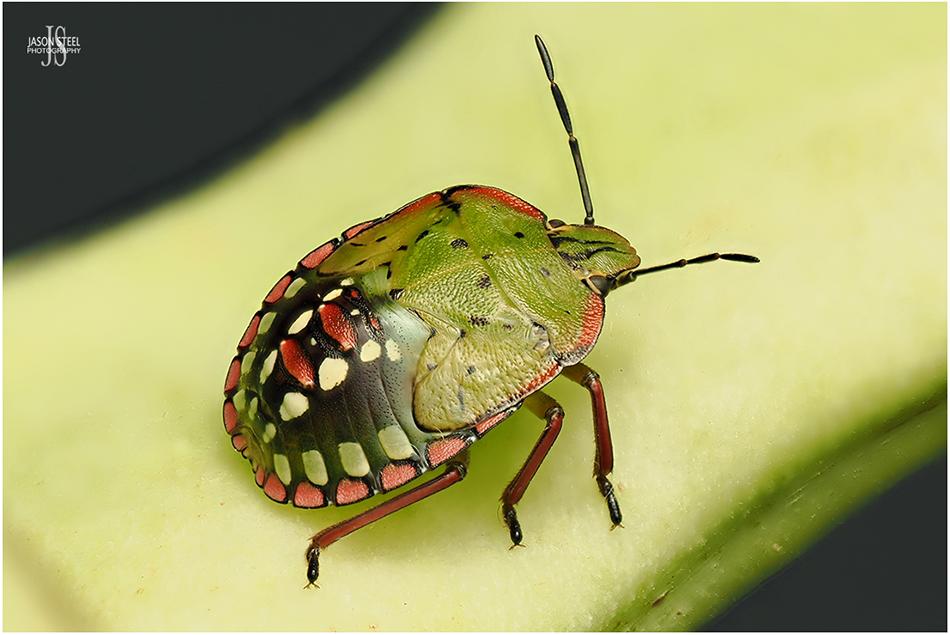
Colourful 10mm final instar of the Southern Green Shieldbug, found in NW London, 28th September 2026.
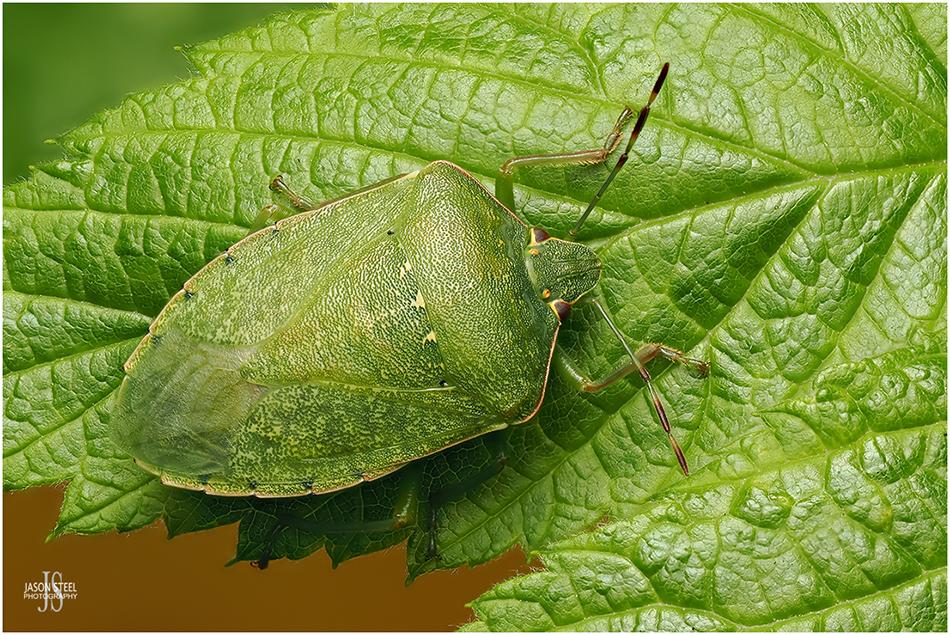
13mm adult Southern Green Shieldbug, found in SE London, 10th October 2026.
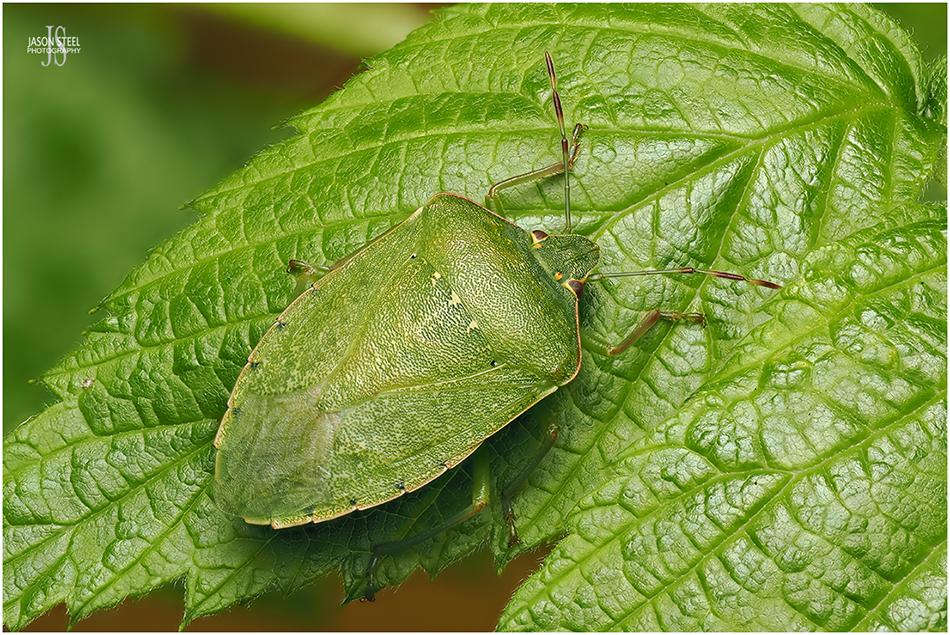
13mm adult Southern Green Shieldbug, found in SE London, 10th October 2026.
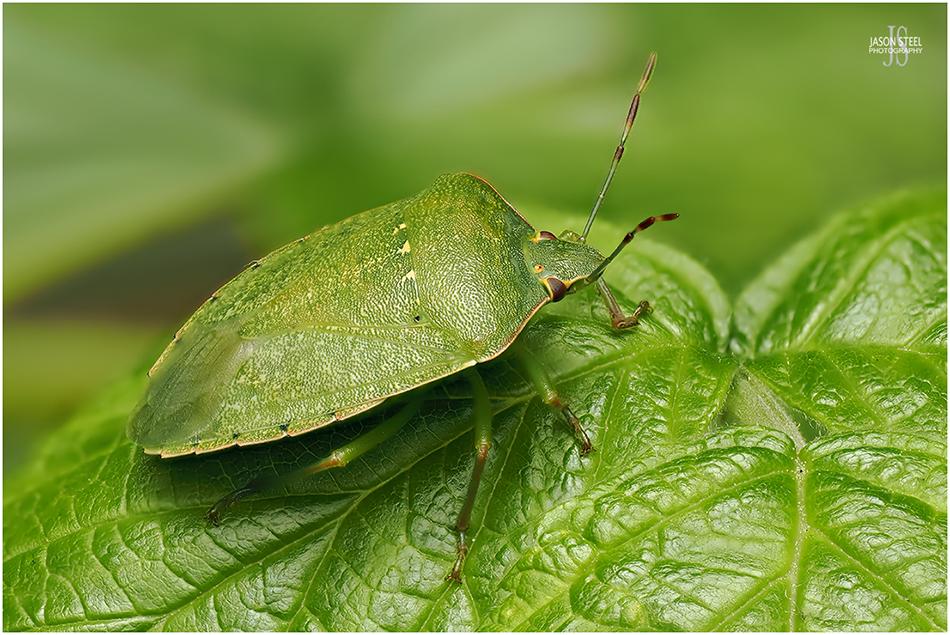
13mm adult Southern Green Shieldbug, found in SE London, 10th October 2026.
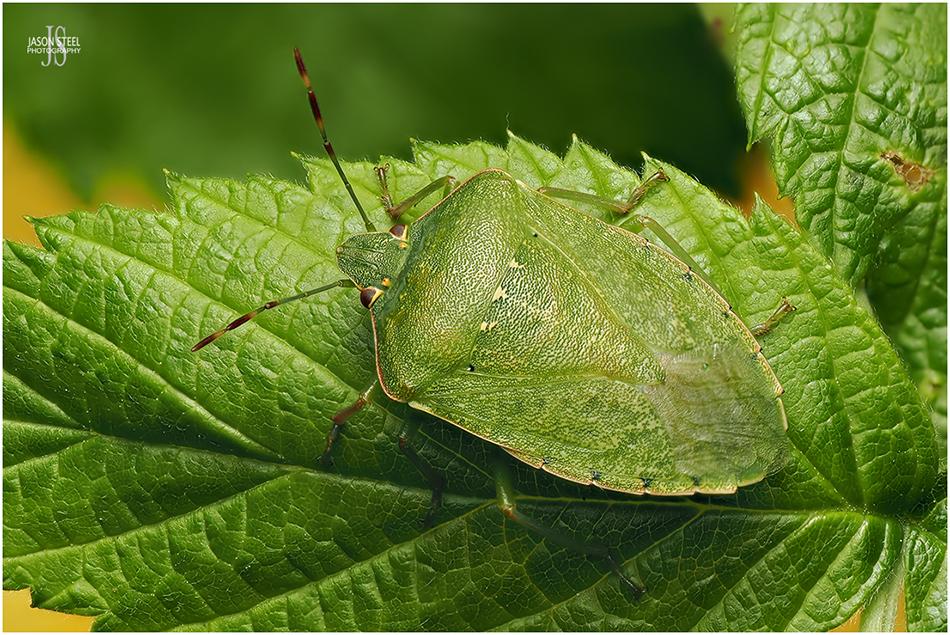
13mm adult Southern Green Shieldbug, found in SE London, 10th October 2026.
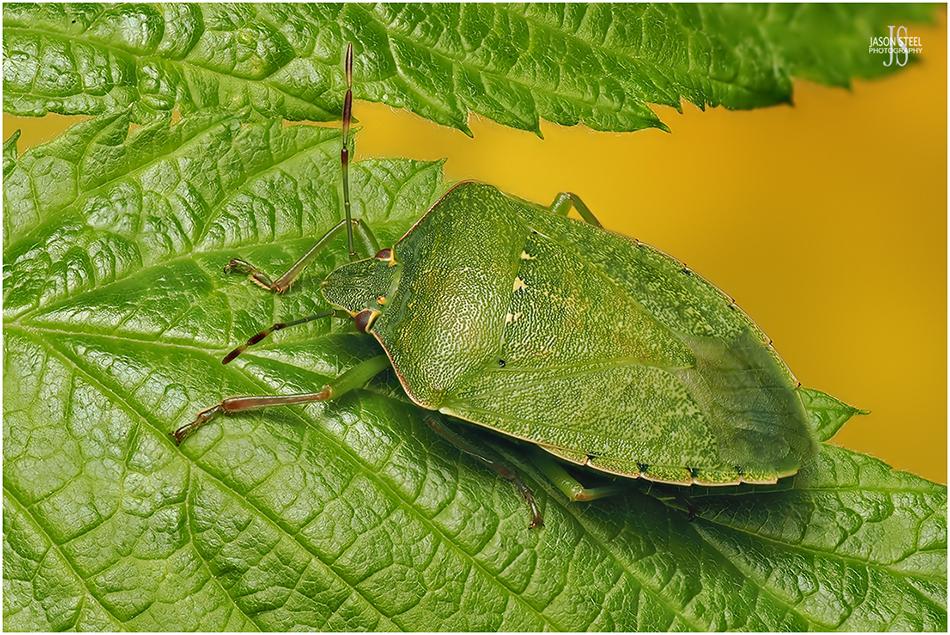
13mm adult Southern Green Shieldbug, found in SE London, 10th October 2026.
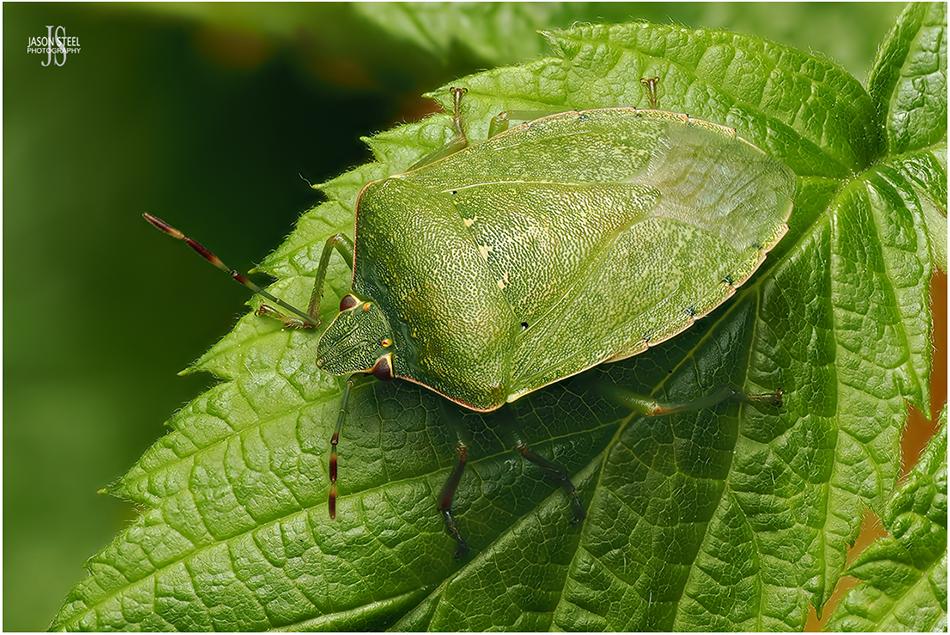
13mm adult Southern Green Shieldbug, found in SE London, 10th October 2026.
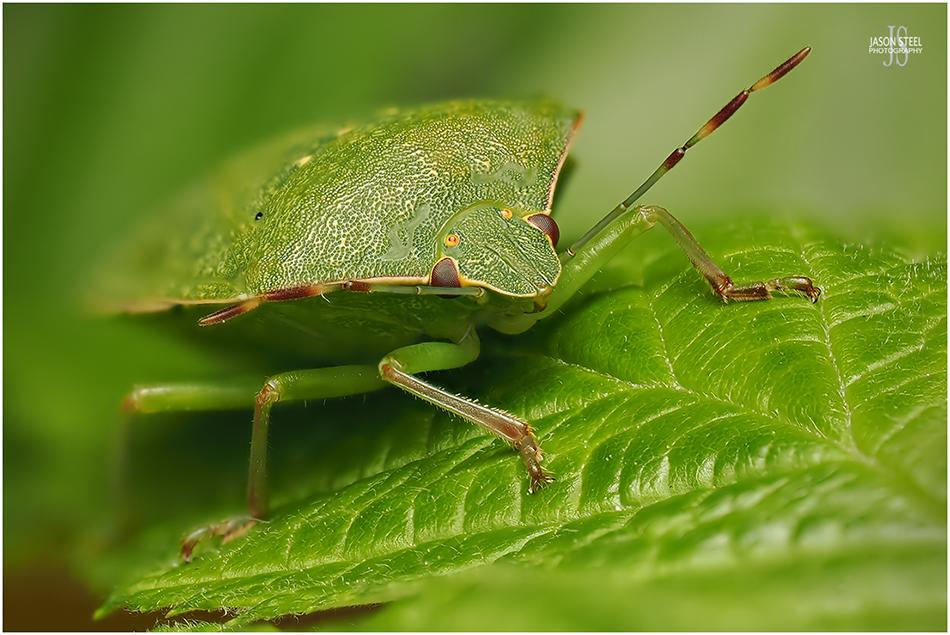
13mm adult Southern Green Shieldbug, found in SE London, 10th October 2026.
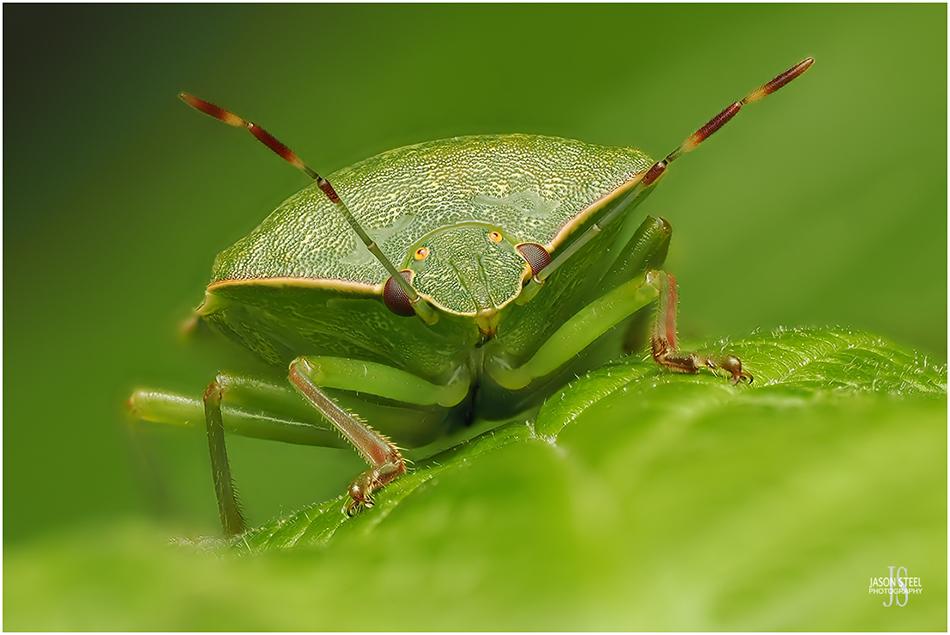
13mm adult Southern Green Shieldbug, found in SE London, 10th October 2026.

10mm Gorse Shieldbug, found on a large Gorse bush at Dartford Heath, north Kent, 18th March 2025.
Gorse Shieldbug - (Piezodorus lituratus)
The Gorse Shieldbug is a medium to large-sized Shieldbug that typically reaches a length of around 10-13mm. Gorse Shieldbugs are common and widespread across Britain, and usually prefer warm and dry habitats, often with sandy soil. As their name suggests adults are strongly associated with Gorse plants, where they feed on the plant sap. Juvenile Gorse Shieldbugs have also been found feeding on other plants including Broom, Weld and other plants in the Genisteae family. They have also occasionally been found on Laburnum, Box and Clovers.
The Gorse Shieldbug can be found in two colour forms, depending on the time of year. Both forms give the shieldbug excellent camouflage against the seasonal vegetation. New adults emerge in late summer and autumn, from July until September, and are predominantly green in colour, with brownish-red markings on the pronotum and corium. At this stage the Gorse Shieldbug can sometimes be mistaken for other similarly coloured shieldbugs such as the Hawthorn Shieldbug, Acanthosoma haemorrhoidale, the Birch Shieldbug, Elasmostethus interstinctus, and the Juniper Shieldbug, Cyphostethus tristriatus.
The adult Gorse Shieldbug overwinters, often at the base of trees, in conifer foliage, or in empty seed pods. Adults emerge once again in very early spring, sometimes as early as late February or early March. After winter the springtime colouration is now entirely bright green, and the Gorse Shieldbug can now be mistaken for the Common Green Shieldbug, Palomena prasina. The red-tipped, yellow legs, bright red antennae, and the pale yellow border of the body-edge help to distinguish the Gorse Shieldbug, as does its choice of habitat.
Adults are fully winged and capable of flight. Mating usually takes place on the host plant, from May through until July. The eggs are laid in batches of 10-20 and can be attached to the stems, leaves or fruits of the host plants.

10mm Gorse Shieldbug, found on a large Gorse bush at Dartford Heath, north Kent, 18th March 2025.

10mm Gorse Shieldbug, found on a large Gorse bush at Dartford Heath, north Kent, 18th March 2025.

10mm Gorse Shieldbug, sucking plant sap from a stem of a large Gorse bush at Dartford Heath, north Kent, 18th March 2025.

10mm Gorse Shieldbug, sucking plant sap from a stem of a large Gorse bush at Dartford Heath, north Kent, 18th March 2025.

10mm Gorse Shieldbug, sucking plant sap from a stem of a large Gorse bush at Dartford Heath, north Kent, 18th March 2025.

10mm Gorse Shieldbug, found on a large Gorse bush at Dartford Heath, north Kent, 18th March 2025.

Adult Hawthorn Shieldbug, photographed in a residential garden in Gravesend, Kent, 29th August 2016
Hawthorn Shieldbug - (Acanthosoma haemorrhoidale)
The Hawthorn Shieldbug is common and widespread across most of the UK, but becomes more scarce in Scotland. They are usually found in mixed woodlands hedgerows, and gardens, where hawthorn is grown. This is probably the largest species of Shieldbug in the UK and adults regularly grow to a length of up to 15mm, and sometimes 17mm. They feed mainly on Hawthorn leaves and berries but have also be known to feed on other deciduous trees, including hazel, birch and oak. Adults can on occasion be found some distance from their larval food plant. These shieldbugs emerge and mate in the Spring, with the nymphs being seen from May until the end of October before reaching maturity. Overwintering adults can sometimes take on a darker reddish form.
Hawthorn Shieldbugs can sometimes be confused with the smaller and less elongate Birch Shieldbug, Elasmostethus interstinctus. Another possible species for comparison if the Juniper Shieldbug Cyphostethus tristriatus.

14mm Hawthorn Shieldbug, Jeskyns Country Park, Gravesend, Kent, 22nd September 2024

14mm Hawthorn Shieldbug, Jeskyns Country Park, Gravesend, Kent, 22nd September 2024

14mm Hawthorn Shieldbug, Jeskyns Country Park, Gravesend, Kent, 22nd September 2024

14mm Hawthorn Shieldbug, Jeskyns Country Park, Gravesend, Kent, 22nd September 2024

14mm Hawthorn Shieldbug, Jeskyns Country Park, Gravesend, Kent, 22nd September 2024

14mm Hawthorn Shieldbug, Jeskyns Country Park, Gravesend, Kent, 22nd September 2024

14mm Hawthorn Shieldbug, Jeskyns Country Park, Gravesend, Kent, 22nd September 2024

14mm Hawthorn Shieldbug, Jeskyns Country Park, Gravesend, Kent, 22nd September 2024

Hawthorn Shieldbug, final instar, photographed on Hawthorn in Lullingstone, Kent, 19th August 2021

10mm Birch Shieldbug, Elasmostethus intersinctus, photographed at Ashdown Forest, East Sussex, 20th May 2022.
Birch Shieldbug - (Elasmostethus intersinctus)
The Birch Shieldbug is a common and widespread species, growing to around 8-11.5mm in body-length. The larvae feed mainly on Birch Trees but can also be found on Hazel and Aspen on occasion too. Birch Shieldbugs are sometimes confused with the slightly larger Hawthorn Shieldbug, Acanthosoma haemorrhoidale. The Birch Shieldbug can be distinguished by its slightly smaller lateral extensions of the pronotum, and the reddish scutellum. The scutellum is the triangular scale that sits between the base of the wings, and on the Hawthorn Shieldbug this scale is entirely green. The Birch Shieldbug overwinters as an adult. Eggs are laid in spring and the larvae hatch in early summer, reaching maturity around August. This species is usually active from May to October.

Juniper Shieldbug, 11th September 2017.
Juniper Shieldbug - (Cyphostethus tristriatus)
The Juniper Shieldbug is a fairly large Shieldbug that typically grows to a length of around 9-10.5mm. Adults can be found throughout most of the year but disappear and overwinter during the coldest months of winter. As its name suggests the main foodplant is Juniper, with the larvae feeding on the berries. This species is also known to feed from Lawson's Cypress, Chamaecyparis lawsoniana, in parks and gardens too. This species was once only locally distributed and restricted to Juniper woodlands in the south of England, but since around 1970 this species has spread northward and now the Juniper Shieldbug has become common in central and southern England and is now established as far north as Scotland.

9mm overwintered Juniper Shieldbug, found in a Pine tree at Ashdown Forest, in East Sussex. 27th March 2025.

Juniper Shieldbug, Hawthorn Shieldbug, and Birch Shieldbug.
The three species, Birch Shieldbug, Hawthorn Shieldbug and Juniper Shieldbug, can share a similar appearance and are often confused with each other. When pictured side by side the differences are quite obvious, as seen in this image. The Gorse Shieldbug, Piezodorus lituratus, is another green and brown Shieldbug that could be confused with these species. - LINK

13mm Red-Legged Shieldbug (Pentatoma rufipes)
Forest Bug / Red-Legged Shieldbug (Pentatoma rufipes)
Another common and widespread species of shieldbug found in a variety of habitats with young nymphs feeding on the sap of oak trees. They are also found on alder, hazel and sometimes other deciduous trees such as apple and cherry. Adults will also feed on caterpillars and fruit too. The Red-Legged Shieldbug reaches around 11-14mm as an adult and can usually be found from July until October. Eggs are typically laid in August. This species can be identified by its orange legs and and pointed, or hooked projections at the front of the pronotum and a pale orange / cream spot in the centre.

13mm Red-Legged Shieldbug (Pentatoma rufipes), found on a Forsythia bush in my SE London garden, 18th August 2023.

13mm Red-Legged Shieldbug (Pentatoma rufipes), found on a Forsythia bush in my SE London garden, 18th August 2023.

13mm Red-Legged Shieldbug (Pentatoma rufipes), found on a Forsythia bush in my SE London garden, 18th August 2023.

13mm Red-Legged Shieldbug (Pentatoma rufipes), found on a Sycamore Tree in Bigs Hill Wood, SE London garden, 25th September 2024

13mm Red-Legged Shieldbug (Pentatoma rufipes), found on a Sycamore Tree in Bigs Hill Wood, SE London garden, 25th September 2024

13mm Red-Legged Shieldbug (Pentatoma rufipes), found on a Sycamore Tree in Bigs Hill Wood, SE London garden, 25th September 2024

13mm Red-Legged Shieldbug (Pentatoma rufipes), found on a Sycamore Tree in Bigs Hill Wood, SE London garden, 25th September 2024

4mm recently moulted, early instar, of the Red-Legged Shieldbug, Pentatoma rufipes, found at Ashdown Forest, East Sussex, 16th May 2025.

4.5mm recently moulted, early instar, of the Red-Legged Shieldbug, Pentatoma rufipes, found on a Hazel Tree at Ashdown Forest, East Sussex, 16th May 2025.

Mid-instar Red-Legged Shieldbug, Pentatoma rufipes, found at Ashdown Forest, East Sussex, 20th May 2022.

This 5mm Mid-instar Red-Legged Shieldbug, Pentatoma rufipes, was found on a fencepost in shady woodland, at Ashenbank Woods, Kent, 22nd May 2024.
This immature specimen looked almost black to the naked eye in shady woodland. Once photographed one can see this Shieldbug is actually very colourful. A 10mm adult specimen was also found on this visit to the same site, on Cleavers / Sticky Weed, Galium aparine.

This 5mm Mid-instar Red-Legged Shieldbug, Pentatoma rufipes, was found on a fencepost in shady woodland, at Ashenbank Woods, Kent, 22nd May 2024.

This 8mm final-instar Red-Legged Shieldbug was one of several found on trees in in shady woodland, at Footscray Meadows, Bexley, SE London, 2nd June 2024.

Spiked Shieldbug found on Bracken at Ashdown Forest. 10th August 2025.
Spiked Shieldbug - (Picromerus bidens)
The Spiked Shieldbug, or Spiny Shieldbug as it's often known, is a large species that grows to a body-length of around 12-13.5mm. This distinctive shieldbug can be identified by its prominent thorn-like projections on the front corners of its pronotum. Spiked Shieldbugs are predatory and feed on the larvae of other insects, particularly the caterpillars of moths, butterflies and sawflies. Spiked Shieldbugs are widespread across Great Britain. They are common in the southern half but become more scarce in the north. The typical habitat includes heathland, deciduous woodland, chalk downland, damp flower-rich meadows and sometimes gardens too. Adults are typically seen from July until November. This species usually overwinters as eggs, which hatch in the spring. Sometimes the eggs hatch early and the nymphs overwinter and reach maturity around July to August. The early instar nymphs have a black pronotum and a deep burgundy coloured abdomen. The late instar nymphs are greyish-black in colour, with pale banded legs and yellow banded antennae. The only species that is sometimes confused with the Spiked Shieldbug if the Forest Bug / Red-legged Shieldbug, Pentatoma rufipes, which as less pointed and more curved projections on its shoulders.

Spiked Shieldbug found on Brambles at Ashdown Forest. 11th August 2025.

Spiked Shieldbug found on Brambles at Ashdown Forest. 11th August 2025.

Spiked Shieldbug found on Brambles at Ashdown Forest. 11th August 2025.
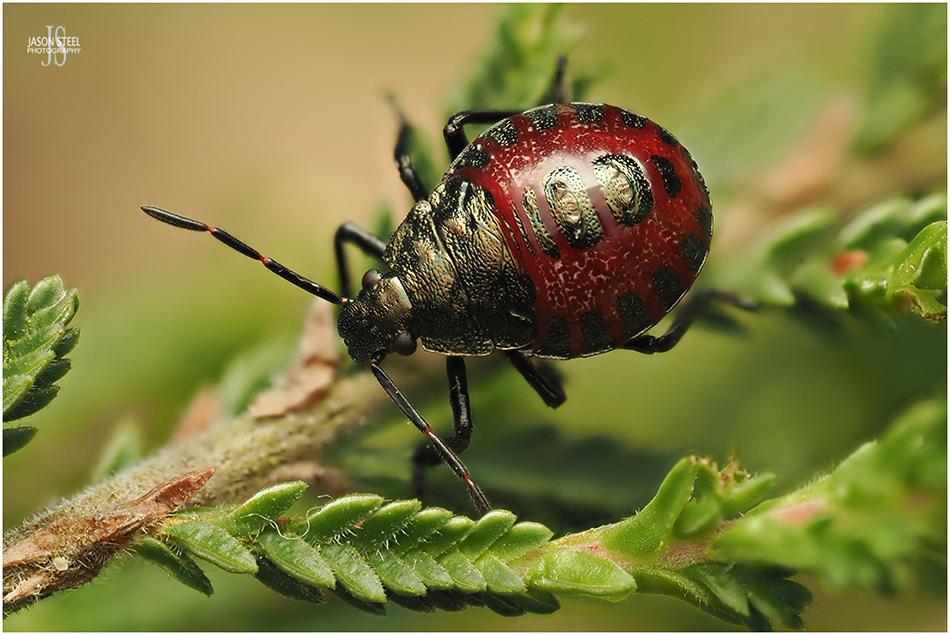
5mm early instar of the Spiked Shieldbug, found on heather at Surrey heathland. 7th June 2026.
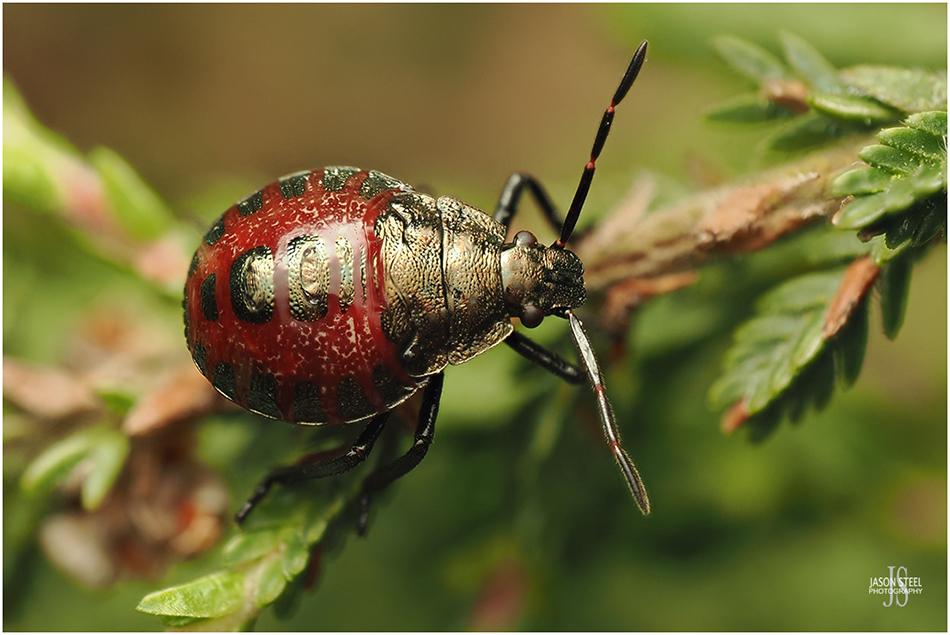
5mm early instar of the Spiked Shieldbug, found on heather at Surrey heathland. 7th June 2026.
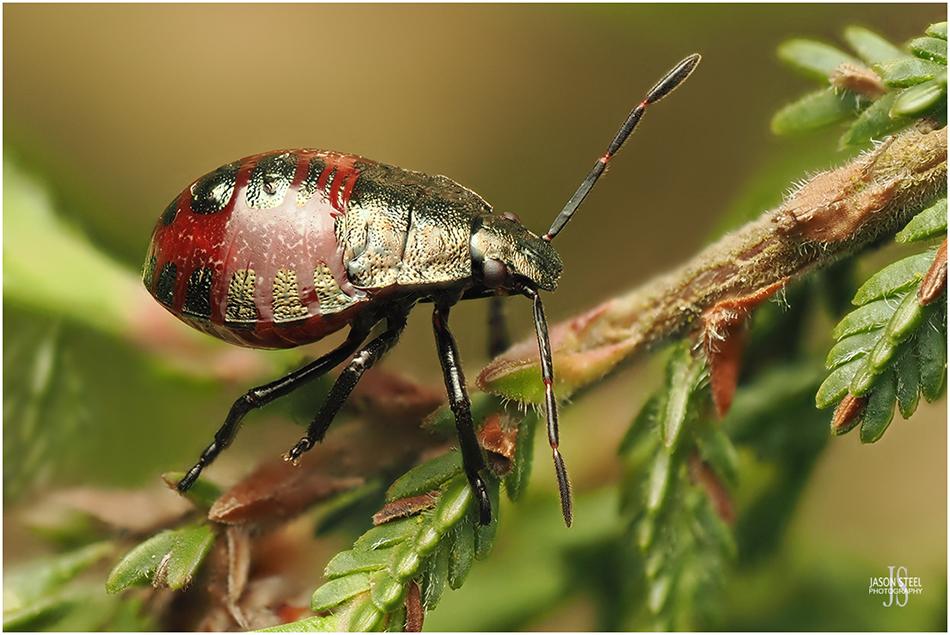
5mm early instar of the Spiked Shieldbug, found on heather at Surrey heathland. 7th June 2026.
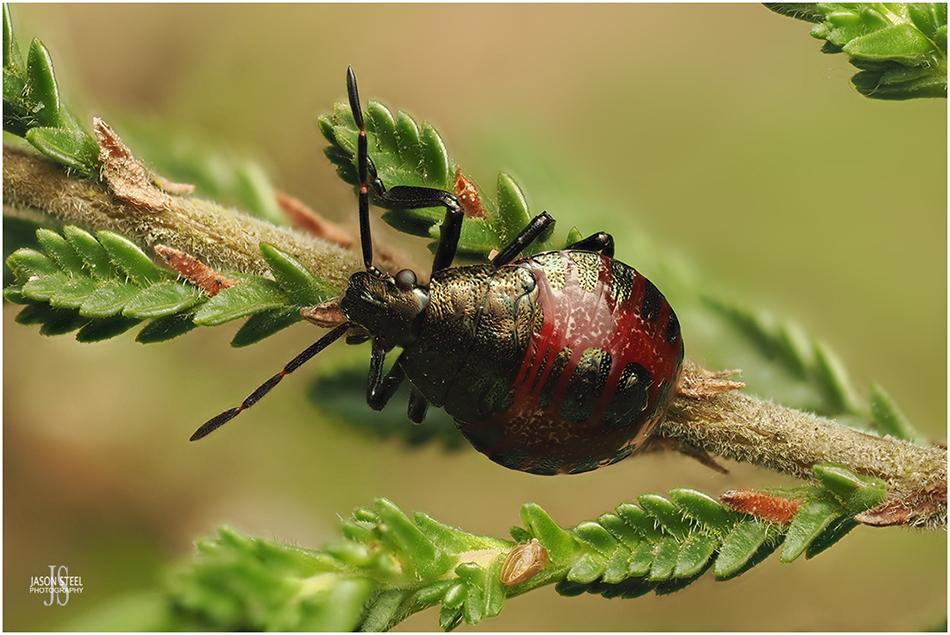
5mm early instar of the Spiked Shieldbug, found on heather at Surrey heathland. 7th June 2026.

8mm Heather Shieldbug, on heather at Ashdown Forest, Sussex, 6th April 2025.
Heather Shieldbug - (Rhacognathus punctatus)
The Heather Shieldbug is a medium-sized bug that typically grows to around 7-9mm in length. This predatory bug feeds largely on the larvae of the Heather Beetle, Lochmaea suturalis, and is usually found on heather plants. The habitat includes heathland, lowland mires and moorland sites, where a good supply of heather can be found. Although the Heather Shieldbug is widespread across the UK it is regarded as a scarce species, and even where it is found it is always recorded in low densities.
The Heather Shieldbug is dark in shade and has a strong metallic, iridescent sheen. In bright sunlight the Heather Shieldbug can reveal tinges of metallic green, bronze and pink. The legs are strongly banded and the pronotum usually exhibits a pale midline to some degree. Adults can be found all year round but are usually seen from April until September. Eggs are usually laid in May and June.

8mm Heather Shieldbug, on heather at Ashdown Forest, Sussex, 6th April 2025.

8mm Heather Shieldbug, on heather at Ashdown Forest, Sussex, 6th April 2025.

8mm Heather Shieldbug, on heather at Ashdown Forest, Sussex, 6th April 2025.

Tortoise Shieldbug (Eurygaster testudinaria)
In the UK there are two very similar species of Tortoise Shieldbug from the Eurygaster genus, Eurygaster testudinaria and the rarer, and slightly smaller, Eurygaster maura. Eurygaster testudinaria can usually by distinguished by the slight depression seen in the centre-front of the bug's head, and by the slightly more protruding shoulders of the pronotum. Adult bugs reach a body-length of around 9-11mm and can be found all year round. The larvae feed on various grasses from around May onwards and reach maturity around July / August. Both the base colour and the markings can vary on the Tortoise Shieldbugs.

10mm Tortoise Shieldbug, found on Brambles at Footscray Meadows, SE London, 1st August 2023.

10mm Tortoise Shieldbug, found on Brambles at Footscray Meadows, SE London, 1st August 2023.

10mm Tortoise Shieldbug, found on Brambles at Footscray Meadows, SE London, 1st August 2023.

10mm Tortoise Shieldbug, found on Brambles at Footscray Meadows, SE London, 1st August 2023.

10mm Tortoise Shieldbug, found on Brambles at Footscray Meadows, SE London, 1st August 2023.

5mm Tortoise Shieldbug nymph, found in seed grass in a grass meadow in Footscray, Bexley, SE London. 20th July 2025.
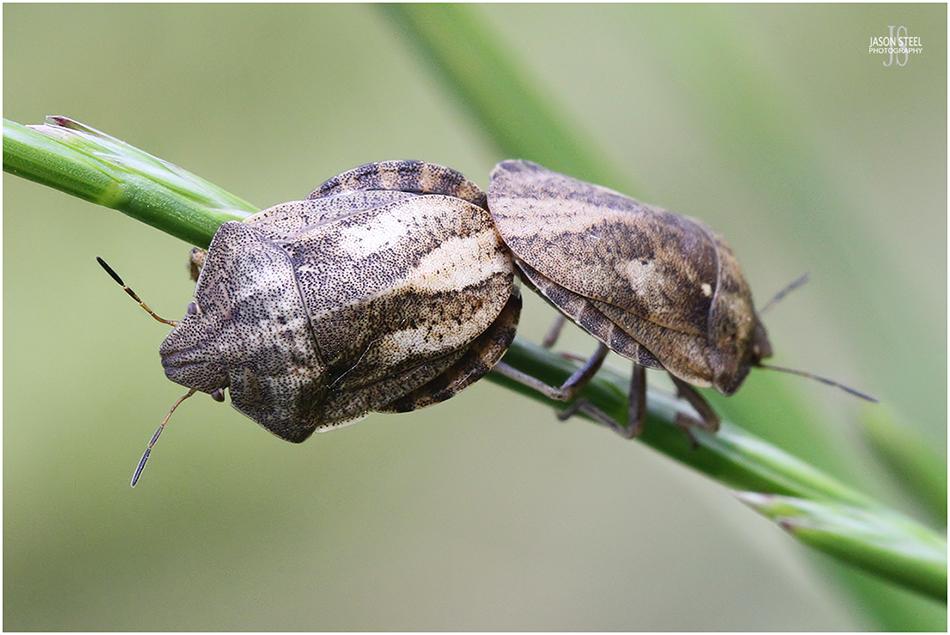
Tortoise Shieldbugs mating, found in long grass in a grass meadow in Footscray, Bexley, SE London. 20th May 2020.

6mm Blue Shieldbug, found in a grass meadow in Crayford, North Kent. 22nd April 2019.
Blue Shieldbug (Zicrona caerulea)
This widespread Shieldbug is a predatory species with a preference for Leaf Beetles. Blue Shieldbugs are dark metallic green / blue in colour. This is a fairly small species that grows to a length of around 5-7mm as an adult. They are usually found on low vegetation, particularly in damp grass meadows, woodland edges and heathland. Adult specimens can be found all year round but are most common from July - September. The nymphs are bright red and black in colour.

Pied Shieldbug (Tritomega sexmaculatus). Photographed on low vegetation at the edge of a grass field in SE London, 27th May 2021
Rambur's Pied Shieldbug (Tritomega sexmaculatus)
Until recently the Pied Shieldbug (Tritomegas bicolor) was fairly unmistakeable and easy to identify in the field, with the possible exception of the Brassica Shieldbug, Eurydema oleracea. However since 2011 Tritomega sexmaculatus has also been recorded in parts of Kent and has now spread across much of Kent, Essex and SE London.
Tritomega sexmaculatus grows to an adult length of 5.5 - 7.5mm. So far all records of Tritomega sexmaculatus in the UK of have been associated with Black Horehound (Ballota nigra), the most frequent foodplant of this species on the continent where it is native. On 1/05/21 I counted 5 Tritomega sexmaculatus in Murston, Sittingbourne, Kent. 3 were on nettles, one was found on brambles and the other was on a water iris at the edge of a large pond.
Our native Tritomegas bicolor and the introduced Tritomega sexmaculatus can be difficult to distinguish but there are keys to look for. The most obvious distinguishing feature of adult specimens is the wing membrane. The wing membrane of Tritomega sexmaculatus is dark black in colour. This is far darker than the grey or brown wing membrane of Tritomegas bicolor. The pronotum margins of Tritomega sexmaculatus are also more extensively white than those of Tritomegas bicolor. The final instar nymphs can also be distinguished too. With Tritomega sexmaculatus the front half of the of the final instar nymph's back is much darker and browner than the rear half, giving the instar a two-tone appearance.

The introduced Pied Shieldbug, Tritomega sexmaculatus. Found on low vegetation at the edge of a grass field in SE London, 27th May 2021

Mating Pied Shieldbugs (Tritomega sexmaculatus). Photographed on nettles at the edge of a grass field in SE London, 28th May 2021
Under bright sunlight, and photographed from the right angle, the black of the Pied Shieldbug reveals very dark metallic green colours. This species of Shieldbug is quick to take to the wing to evade danger. Several times these Pied Shieldbugs flew short distances of around 20-50cm as I approached them with my camera.

Early instar of the Pied Shieldbug (Tritomegas bicolor). Found in a grass meadow in SE London, 21st June 2016.
Pied Shieldbug (Tritomegas bicolor)
Our native Pied Shieldbug, Tritomegas bicolor, is common across England and Wales and is usually found in hedgerows, woodland edges and occasionally gardens. Pied Shieldbugs use their piercing mouthparts to drink sap from Dead Nettles (Lamium) and Black Horehound (Ballota nigra). Early instars are orange & black, then yellow & black and finally cream and black. Tritomegas bicolor grow to an adult length of 5.5 - 7.5mm. Adult female Pied Shieldbugs show dedicated parental care during the early stages of their offspring. The eggs are laid as a cluster in loose soil, near to the host plant. The female will then guard the eggs for three weeks, regularly turning them using her snout within the soil. Once hatched the tiny nymphs are them lead to the food plant.
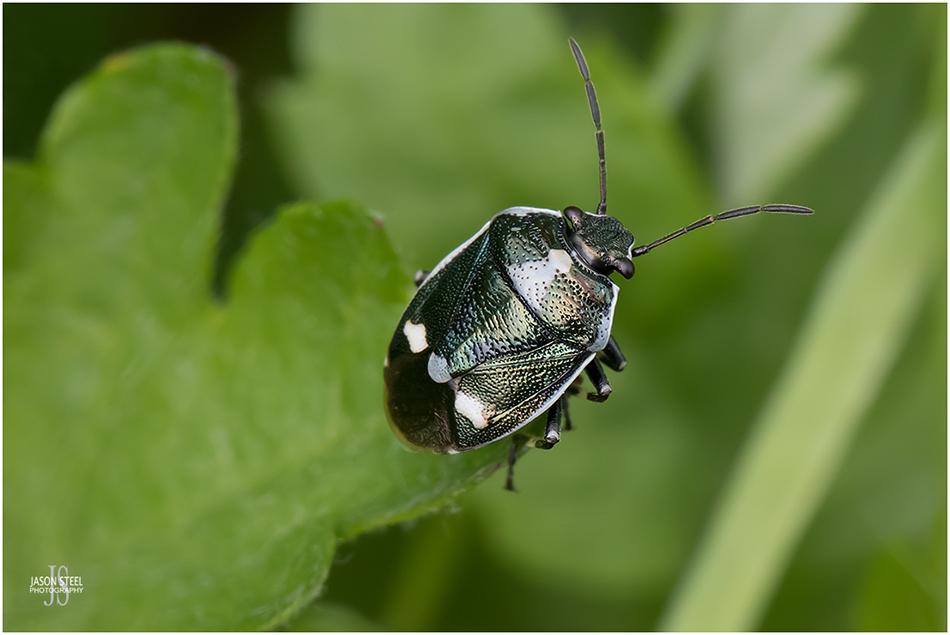
5mm Brassica Shieldbug (Eurydema oleracea). Photographed on nettles at the edge of a grass field in SE London, 28th May 2021
Brassica Shieldbug / Crucifer Shieldbug / Cabbage Bug - Eurydema oleracea
In the UK we have another black and white species of Shieldbug, the Brassica Shieldbug, Eurydema oleracea. The Brassica Shieldbug can be identified by the bold white mark in the centre of its pronotum, and three bold dots, one at the base of its scutellum and one either side. These white markings on Eurydema oleracea also regularly occur in bright red, orange, yellow or cream, instead of white. The black base colour can also be dark metallic green or blue. The Brassica Shieldbug is similar in size to the Pied Shieldbugs and grows to around 5-7mm in length. This species is widespread in southern and central England, with some records now coming from Wales too. Adults can be found all year round and the colourful nymphs can usually be found during May and July, feeding mainly on the flowering parts of various Brassicaceae, plants including garlic mustard and horse-radish, rape, cabbage and turnip.
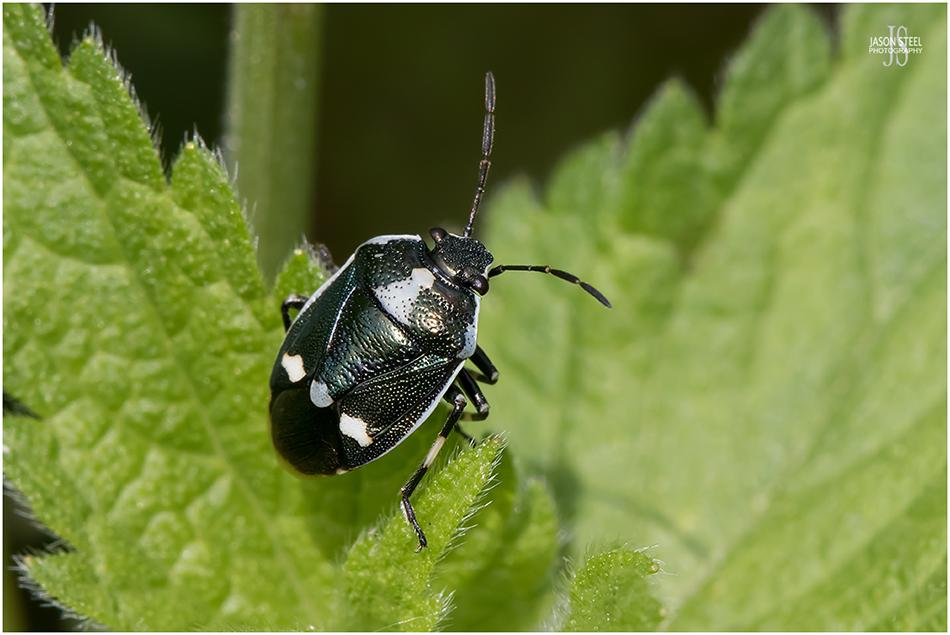
5mm Brassica Shieldbug (Eurydema oleracea). Photographed on nettles at the edge of a grass field in SE London, 28th May 2021

6mm Brassica Shieldbug (Eurydema oleracea). Photographed in Cliffe, Kent, 30th March 2024.

6mm Brassica Shieldbug (Eurydema oleracea). Photographed in Cliffe, Kent, 30th March 2024.

6mm Brassica Shieldbug (Eurydema oleracea). Photographed in Cliffe, Kent, 30th March 2024.

4.5mm Brassica Shieldbug, Eurydema oleracea. Photographed in Cliffe, Kent, 30th March 2024.

Mating pair of Brassica Shieldbug, Eurydema oleracea. Photographed in Cliffe, Kent, 24th May 2024.

4.5mm Brassica Shieldbug, Eurydema oleracea. Photographed in Cliffe, Kent, 24th May 2024.
This colourful specimen was one of 12 Brassica Shieldbugs I found in close proximity on lakeside vegetation in Cliffe, Kent. 8 specimens were the typical black / dark green and white colour, and 4 specimens exhibited these red / orange markings. All of the colourful specimens were around 4.5 - 5mm in length, suggesting that they were probably all males.

4.5mm Brassica Shieldbug, Eurydema oleracea. Photographed in Cliffe, Kent, 24th May 2024.

4.5mm Brassica Shieldbug, Eurydema oleracea. Photographed in Cliffe, Kent, 24th May 2024.

4.5mm Brassica Shieldbug, Eurydema oleracea. Photographed in Cliffe, Kent, 24th May 2024.
8mm adult female Parent Bug, Elasmucha grisea, with young nymphs, in an Alder Tree, in Bexley, SE London. 21st August 2021
Parent Bug (Elasmucha grisea)
The Parent Bug is a common and widespread species of Shieldbug found cross the UK. Females grow to around 7-9mm whilst the males are slightly smaller. They are usually found feeding on Alder and Birch trees, but have also been known to feed on Beech and Holly. Adults are usually reddish brown and usually show an obvious black patch on the scutellum (middle of their back). Some specimens can be found in grey or even a pale greenish brown too. At the end of autumn adult specimens overwinter and will emerge and mate in the following spring. Males die shortly after mating but the females will often live until the end of summer.
Whilst most Shieldbug species do not stick around to see their eggs hatch the Parent Bug gets its name from the unusual parental care that the female shows to her eggs and larvae. An adult female will see out most of the rest of her days guarding her offspring from parasitic wasps, beetles, earwigs, ants and other predators that would readily feed on unsupervised eggs and nymphs. The adult female usually keeps the young nymphs tightly herded underneath her and any nymphs that try to wander off are quickly nudged back into line using her antennae. These nymphs pictured above were accidentally disturbed by the diffuser on my flash as I took the photo, but were all pulled back into line afterwards by the Parent Bug. At the end of the third instar stage the nymphs will start to disperse and they'll now have to fend for themselves. New adults can be found from August onwards.